

A CT scan is a radiological examination also known as computed tomography (CT). It is performed in the Medical Imaging department, within Radiology. This department also performs other imaging and interventional radiology procedures, such as MRI, mammography, and biopsies.
What is a scanner?
This imaging technique uses an X-ray machine to create images of a part of your body (the doses used are as low as possible and limited to the area examined). This radiation is harmless to you and those around you.
A CT scan enables us to visualize your organs and look for any lesions, whether benign or cancerous. Hundreds of images of the inside of your body are taken and visualized in cross-section on a computer screen.
Most scans involve the injection of an iodinated contrast medium, which opacifies certain elements of the body to make them more visible.
How does the exam work?
The administration of an iodine-based contrast agent is common but not always necessary; it depends on the organ being examined. If a contrast agent is needed, it will be provided directly by our facility on the day of your exam. Therefore, you do not need to take any action at your pharmacy.
The injection is made into a vein in the arm, even for patients with an implantable chamber, as the iodine product is too viscous to be administered there. At the time of injection, it is common to feel a sensation of heat or a strange taste in the mouth. Both the scan and the injection are painless.
The most frequent side effects are :
- An allergic reaction to the contrast medium, particularly if you have a history of allergies. This unpredictable reaction is generally transient and not serious. It may be more severe and require treatment.
- Impaired kidney function; this is why we ask you to have a blood test to assess the proper functioning of your kidneys before the scan (creatinine and creatinine clearance), and to drink plenty of fluids before and after.
What you need to tell the medical team
Special precautions will be taken according to the information you provide when booking your appointment and before the examination.
Remind your radiologist if you are pregnant or likely to become pregnant (delayed menstruation), if you are diabetic or if you have kidney disease (renal failure).
If you feel any pain or unpleasant sensation, let the medical or paramedical staff know, and they will remain at your side throughout the examination.
The day of the exam: preparing well
- You do not need to fast (with rare exceptions, which will be explained to you before the test).
- Do not smoke in the hours before the exam.
- Unless otherwise indicated, you can drink normally and take your medication if necessary.
- When you arrive on the ward, you must remove any jewelry or metal objects in your possession (piercings, bras, keys, etc.) and leave them in the cubicle provided.
The exam process
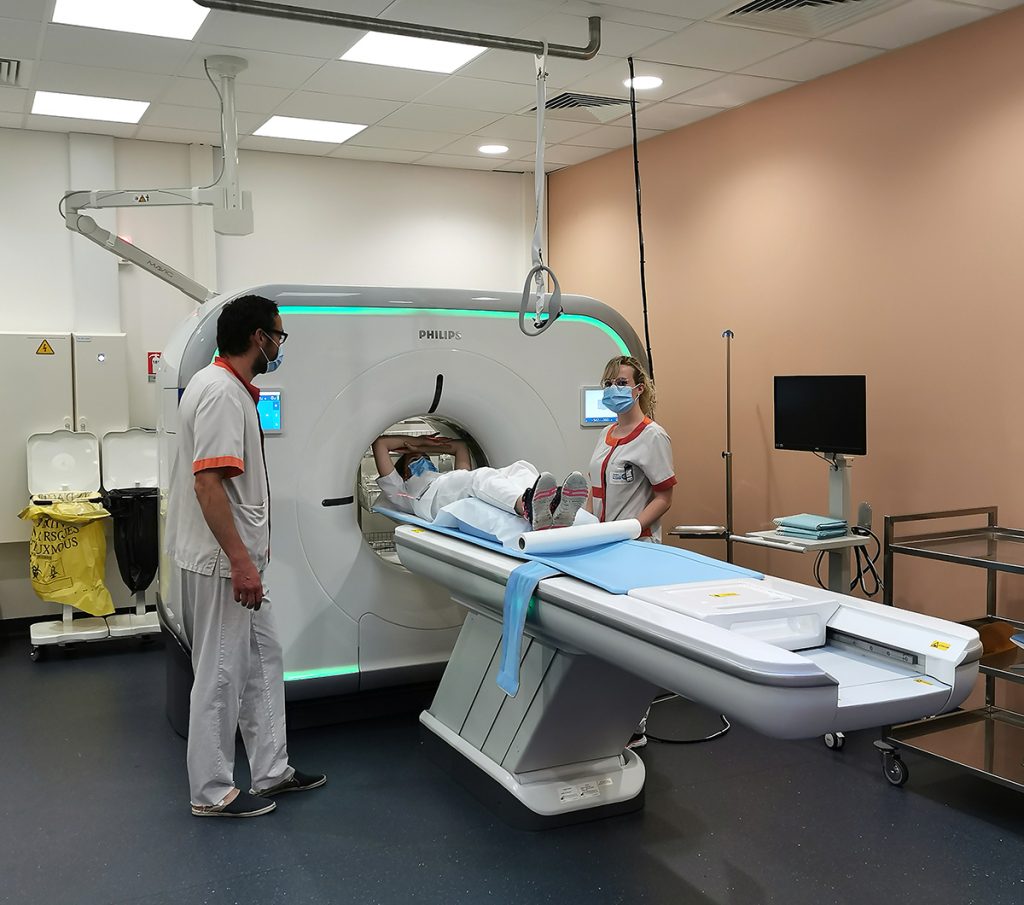
You lie on your back, usually with your arms behind your head or at your sides, on an examination bed that moves slowly through a wide ring. This is where the various images are taken.
You should try to remain still. The medical team stays in touch with you via a microphone, and may ask you to hold your breath several times.
A scan takes around 10 to 15 minutes.
CAUTION: if you experience pain while lying down, remember to take a painkiller 45 to 60 minutes before the examination.
Speak to the doctor who prescribed the examination.
What should I do after the exam?
In most cases, you will have no adverse effects.
There are no special precautions to take! You can carry on with your normal activities (work, sport, etc.).
After the examination, with or without injection, you can go home as normal and drive your car without difficulty.
If you have received an injection of product, you will be asked to drink abundantly for 24 hours to accelerate the elimination of the product.
If you feel any pain or abnormal phenomenon, consult your doctor or notify the establishment or service that performed the examination.
And the results?
The examination images are analyzed by a radiologist. A report and the images obtained are sent directly to the prescribing physician (and to your attending physician), who will explain the results to you during a consultation; in some cases, the report is given to you directly with the images. Keep them, file them and don't forget to bring them to your next consultation.