
A center for the fight against cancer
The Centre François Baclesse is one of 18 cancer centers in France, and a member of the Unicancer network. Located in Caen, Normandy, the Center is a regional, national and international reference in the field of oncology.
The Centre François Baclesse is a not-for-profit private healthcare establishment of collective interest (ESPIC). As a player in the public hospital service, the Centre François Baclesse does not operate in the private sector, nor does it charge extra fees, and applies only conventional rates. As a non-profit organization, it is eligible to receive donations and bequests, with full tax exemption.
The Center is part of the Unicancer network, which groups France's 18 cancer centers.
The Centre François Baclesse has a threefold public service mission: care, research and teaching, in the exclusive field of cancerology.
The Centre François Baclesse is headed by Professor Roman Rouzier, assisted by Michael Canovas.
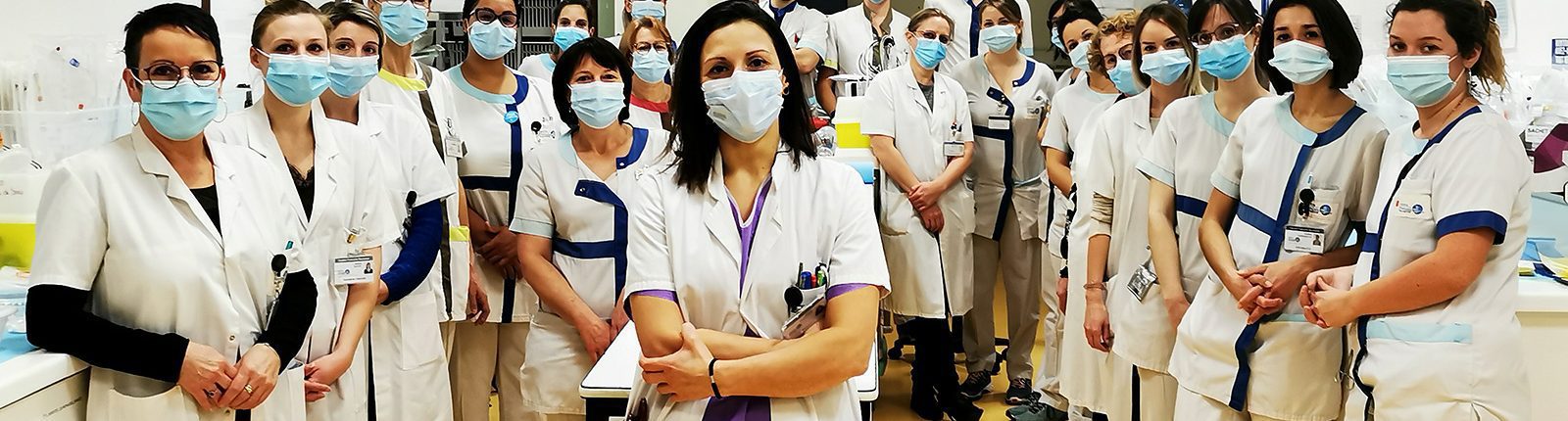
With its 1,162 professionals, the Center cares for almost 27,000 patients every year and welcomes over 600 medical and paramedical students.
Our strengths
The Center boasts a high-tech technical platform recognized at national and European level, enabling patients to access high-quality care throughout their stay.
Firmly rooted in its local area, always keen to strengthen its links with community medicine and to remain true to its mission as a referral facility at the cutting edge of innovation, the Center has been the third French Center authorized to carry out proton therapy activity since 2018. The Center's researchers are involved in the work of associated research teams with the Inserm label.
- Innovative technical platforms: radiotherapy, proton therapy, diagnostic and interventional radiology, nuclear medicine, operating theatre, cancer biology and genetics, anatomopathology
- Innovative treatments: rapid pathways, anticipation of chemotherapy, personalized medicine based on biological profiles and care pathways...
- A wide range of supportive oncology care services to improve patients' quality of life
- A Clinical Research Unit to follow patients in clinical trials, and an accredited Early Phase Unit to participate in the development stages of new molecules.
The Centre Baclesse is one of only 3 centers in France to offer the therapeutic innovation of proton therapy. Proton therapy is an innovative form of radiotherapy that improves the efficacy and reduces the toxicity of certain cancer treatments. For further information https://normandie-protontherapie.fr/
Our values
The Centre François Baclesse places the values of the Unicancer network at the heart of its commitments:
| Humanism | Innovation | Excellence | Solidarity |
|---|
Key figures for 2025
The Baclesse Center employs1,226 people, 75% of whom are women, broken down as follows:
- 15% of doctors and researchers
- 54% non-medical care staff
- 31% of personnel in the logistics, technical, and administrative sectors
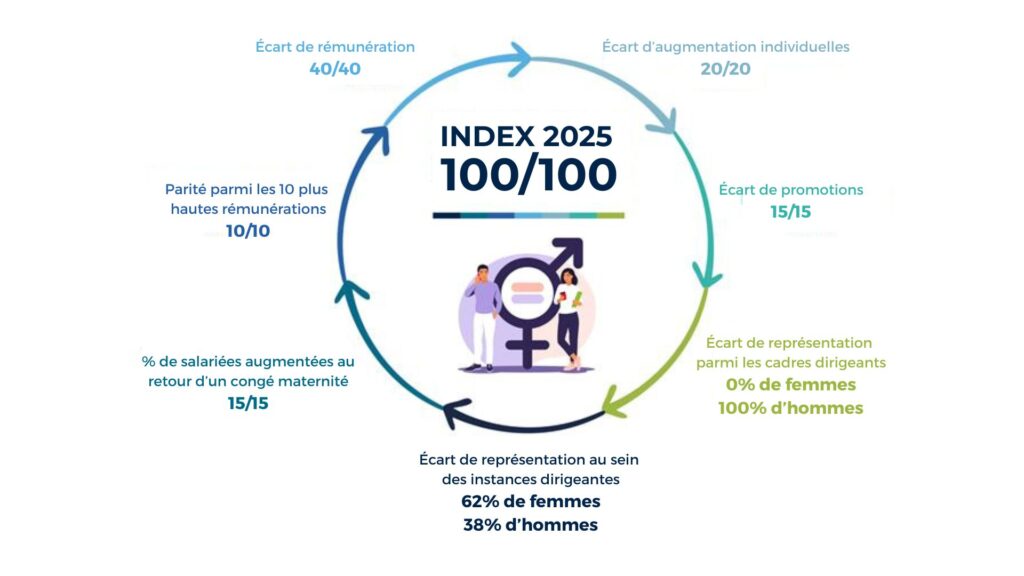
Gender equality index 100/100, broken down as follows:
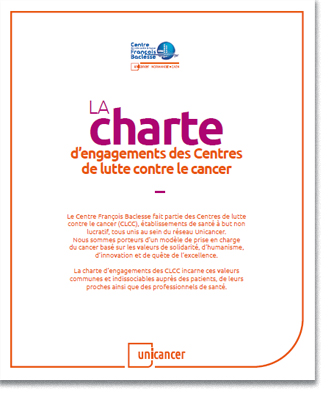
Charter of commitments
The Centre François Baclesse is committed to patients and their families with this 6-point charter, common to all cancer centers in the Unicancer network:
Commitment no. 1
To offer you the best possible treatment, adapted to your cancer, at the cutting edge of medical knowledge and advances in research and technology.
Commitment no. 2
Clearly informing you, listening to you and involving you in decisions that concern you
Commitment no. 3
Support you in coordinating the care you receive both inside and outside the hospital
Commitment no. 4
Helping you and those around you to maintain the best possible quality of life both in hospital and at home
Commitment no. 5
Promote prevention and screening actions to reduce your risk of cancer or diagnose it as early as possible
Commitment no. 6
Guaranteed access to the full range of healthcare services, whatever your financial resources, with no extra charges
Labels and certifications
- The Center is certified A by the French National Authority for Health (HAS), the highest level.
- It has been awarded the CLIP2 label by the French National Cancer Institute (INCa).
- The Centre François Baclesse is accredited as a Comprehensive Cancer Centre by the Organization of European Cancer Institutes (OECI).
Corporate documents
Project 2024-2028
Sustainable development
Our sustainable development approach
In order to "decarbonize" its operations, the Centre is pulling out all the stops: mobility, energy, waste, works, responsible purchasing and so on.
Aware of its environmental impact, the Center has undertaken numerous initiatives, formalized in 2014 by an initial sustainable development policy and the creation of a dedicated Committee. Notable actions include: the use of a cogeneration system for over 20 years to simultaneously produce electricity and heat, a mobility plan that has increased the rate of bicycle riders from 5% to 12% in 5 years, the creation of 28 waste sorting channels, a halving of DASRI, the elimination of 130,000 annual plastic bottles thanks to the installation of water fountains and the realization of 23 awareness programs during weeks dedicated to sustainable development, mobility or waste reduction.
Building on the momentum generated a few years ago, the aim now is to accelerate the hospital's shift towards eco-responsibility through an ambitious program. The aim is to minimize the environmental impact of hospital activities, as part of a socially responsible approach.
This new project integrates the 2024-2028 establishment project and is in line with the ARS Normandie regional roadmap, and is based on the following objectives:
- Strengthening the management of the sustainable development approach
- Transforming and supporting practices towards eco-responsible care
- Continuing to reduce the carbon impact of transportation
- Promoting responsible purchasing and sustainable food
- Accelerate waste reduction and recovery and optimize waste circuits
- Support services in reducing their impact on the aquatic environment and promote biodiversity
- Pursuing ecological renovation and energy transformation
- Raising awareness and involving professionals in the ecological emergency and eco-design of care products
- Greening digital healthcare
This policy is the subject of an action plan with monitoring indicators, steered by the Sustainable Development Committee.
Center Baclesse commits to developing cycling culture
The Centre Baclesse is committed to developing a cycling culture among its employees. In 2022, the Centre has launched the Objectif Employeur Pro-Vélo (OEPV) program.
Created by the Fédération française des Usagers de la Bicyclette (FUB) and financed by the Certificats d'Economies d'Energie (CEE), this program aims to support private, public and community employers in improving their cycling policies.
The Centre Baclesse has embarked on the process of obtaining the "Pro-Bike Employer" label, in recognition of the many actions it has taken to encourage employees to use bicycles and reduce their impact on the environment.
History
Dr François Baclesse, a pioneer
The Center is named after Dr François Baclesse. Who was he?
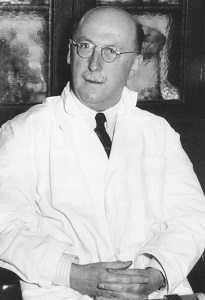
(c) Musée Curie (Coll. Service Icono Hôpital)
Born on April 26, 1896 in the Grand Duchy of Luxembourg, François Baclesse studied medicine in Paris, where he passed the internship examination in 1920. Particularly interested in the use of ionizing radiation for medical purposes, he was a pupil of Marie Curie and Claudius Regaud at the Radium Institute in Paris. François Baclesse is one of the founding fathers of modern clinical radiotherapy. His world-renowned publications focused on cancers of the breast, larynx, uterus and bone sarcomas.
He died on November 11, 1967.
Successive directors
- Prof. Roman ROUZIER: since July 1, 2023
- Prof. Marc-André MAHE: July 2018 to June 2023
- Pr Khaled MEFLAH: from 2008 to 2018
- Prof. Mathieu MONCONDUIT: acting director in 2007
- Pr Jean-François HERON: from 1992 to 2007
- Dr Jean ROBILLARD: from 1988 to 1991
- Pr Jacques Séverin ABBATUCCI: from 1970 to 1988
- Prof. Jacques LEMENAGER: acting director from 1968 to 1970
- Dr Pierre JACOB: from 1951 to 1968
- Dr Louis GOSSELIN: from 1934 to 1951
- Prof. Maurice OSMONT: from 1931 to 1934
Key dates
| 1925 | Creation of the Caen Cancer Center (CAC) on September 5, 1925. This is a specialized department of the Caen Regional Hospital Center, located in "Pavilion 2" of the CHR. |
| 1945 | The decree of October 1, 1945, signed by General de Gaulle, laid the definitive foundations for the organization of the Centres de Lutte Contre le Cancer (CLCC): o Private, non-profit establishments o Participating in the public hospital service o Able to receive donations and legacies to finance their research and development. |
| 1947 | By ministerial decree of October 3, 1947, the Caen CLCC was officially recognized as a civil entity in its own right. Its missions are cancer prevention, screening and treatment, as well as research and teaching. At the same time, the Ministry of Health gave it a regional vocation: Calvados, Manche, Orne and Eure. Advanced consultations were set up in Cherbourg, Saint-Lô, Saint-Hilaire du Harcouët, Alençon and Evreux. |
| 1952 | Pavilion 2, found in a state of disrepair after World War II, was renovated. It had 50 beds in 10 rooms. At that time, 203 patients were treated with conventional radiotherapy equipment. |
| 1960 | Inauguration of telecobalt therapy and radioisotope services. The cobalt bomb was temporarily installed in the former underground ice house in Parc St Louis. Its structure, composed of a thick shell of earth, was perfectly suited to the waterproofing required for radiation protection. At that time, dosimetry was manual and required three hours of preparation per patient... The first multidisciplinary groups, called "medical committees," were gradually set up to discuss the treatments to be offered to patients. Towards the end of the 1960s, the Center reached such a level of activity that it conducted a thorough review of its development. The decision was made to build a new facility. |
| 1970 | The new Cancer Center, built on the hospital grounds between 1970 and 1973, was inaugurated on February 22, 1975, in the presence of Simone Veil, Minister of Health. The new center was named the "François Baclesse Center" in honor of one of the fathers of modern radiotherapy. |
Member of the Unicancer network
Unicancer is the only French hospital network 100% dedicated to cancer research.
It brings together :
- 18 Cancer Research Centers (CLCC) and 2 affiliated members, spread over 21 hospital sites,
- 23,000 professionals committed to the fight against cancer every day.
As a healthcare player, Unicancer defends the unique model of care offered by cancer centers, which combines excellence, humanism, solidarity and innovation.
C3 member
Baclesse is a founding member of C3, the cooperation between the 3 CLCCs of the Grand-Ouest region: Caen, Rouen and Lille.