
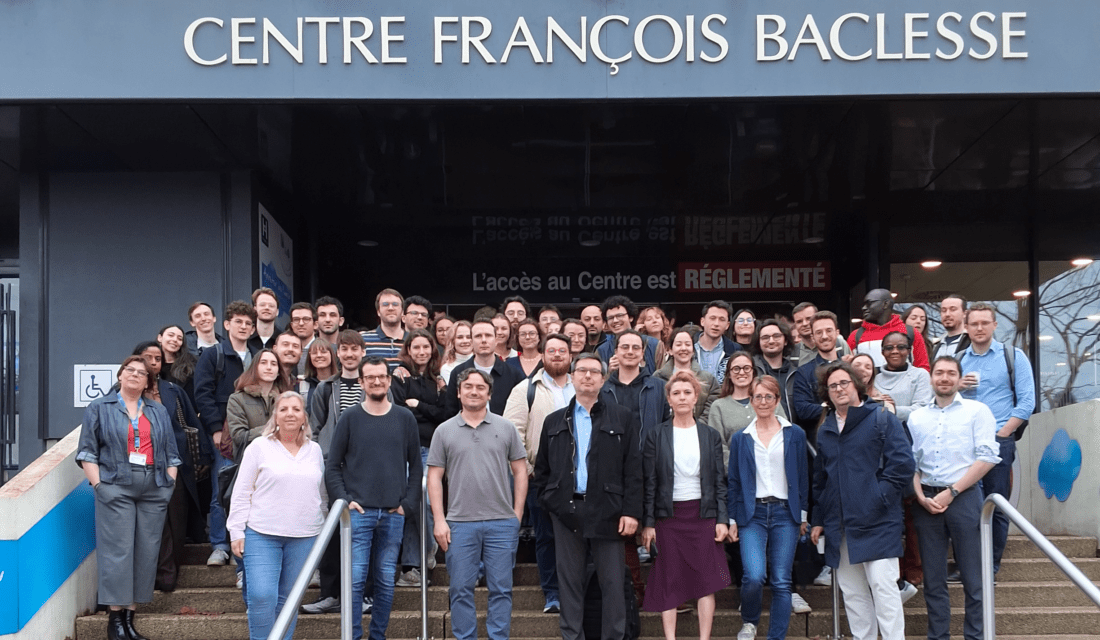
On Thursday, April 2, and Friday, April 3, 2026, the Baclesse Center hosted the G4’s interregional validation sessions for the Diploma of Specialized Studies (DES) in Oncology, bringing together the university hospitals of Amiens, Lille, Rouen, and Caen.
Nearly a hundred residents, junior physicians, and faculty members gathered in Caen for an intensive program of training, evaluation, and scientific discussion—an essential part of the training for future oncology specialists.
A key step in the training of oncologists
During these sessions, about fifteen residents nearing the end of their advanced training phase presented their theses. Through this demanding exercise, they demonstrated their ability to apply solid scientific knowledge, engage in critical thinking, and structure a thorough analysis.
The junior doctors, for their part, were evaluated through clinical simulation exercises. These exercises are designed to assess their decision-making skills, their ability to adapt, and their capacity to manage complex situations in scenarios that closely mirror real-world practice.
All of the evaluations were conducted under the close supervision of about ten examiners, who ensured the academic and pedagogical quality of the program.
Artificial intelligence at the heart of the discussion
The event concluded with a scientific conference on the integration ofartificial intelligence in oncology, led by Professor Roman Rouzier, Aurélien Corroyer-Dumont, and Professor Juliette Thariat.
The speakers highlighted the opportunities these technologies offer for improving diagnosis, personalizing treatments, and optimizing care pathways. They also emphasized the ethical, organizational, and scientific challenges associated with their implementation in clinical practice.
An example of Baclesse’s educational mission
By hosting this event, the Baclesse Center reaffirms its commitment to training healthcare professionals —a core component of its mission, alongside patient care and research.
Helping to train the oncologists of tomorrow in a demanding and innovative environment directly contributes to the continuous improvement of the quality of care provided to patients.