
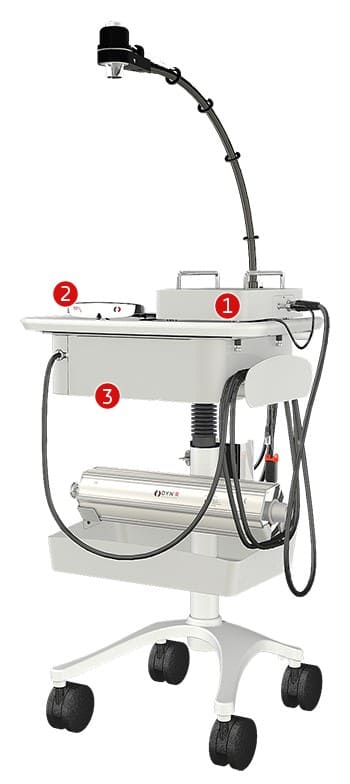
The Baclesse Center has just acquired a new device called "DYN'R," which can be used to treat mobile tumors (located in the chest or abdomen) using proton therapy.
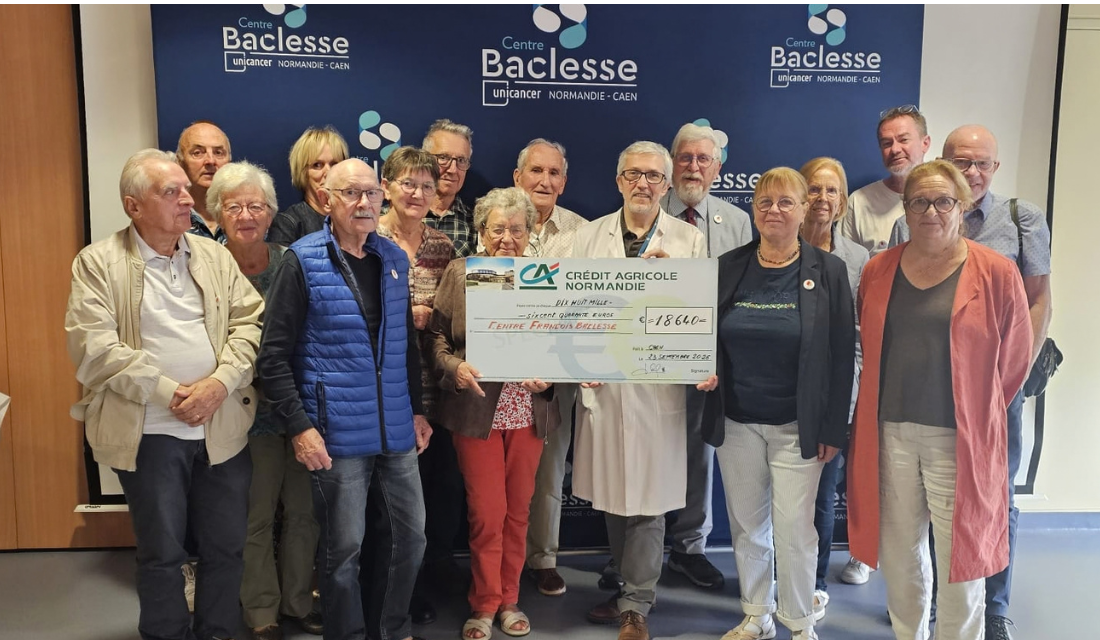
Until the acquisition of this equipment, these mobile tumors could only be treated with conventional radiotherapy. Now it is possible to extend the range of treatment options with proton therapy. The equipment, which cost €55,000 to purchase and maintain, was entirely financed by 3 associations: Les Lions Clubs de Normandie, the association Cœur et Cancer and the association Tulipes en Val-ès-Dunes.
The benefits of proton therapy
Radiotherapy involves the use of X-rays to progressively destroy cancer cells. Proton therapy is an innovative form of radiotherapy, using proton ions (rather than X-rays) toimprove the efficacy and limit the toxicity of certain cancer treatments, particularly in children.
Proton therapy irradiates tumors in a highly targeted manner. As a result, healthy tissue is preserved even better than with other radiotherapy techniques. However, proton therapy dose distribution is highly sensitive to changes in anatomical depth along the beam path. Thus, respiratory movement represents a major obstacle to the use of proton therapy for tumors that move with respiration. These movements can therefore cause significant changes in proton dose distribution for locations such as the lungs (sarcomas, neuroblastomas), liver (carcinomas, hepatoblastomas) and mediastinum (sarcomas, Hodgkin's lymphomas, neuroblastomas, rhabdomyosarcomas).
For this reason, until now, these localizations could not be treated with proton therapy in Caen.
As a reminder, only three centers in France have the proton therapy technique: the Centre Antoine Lacassagne in Nice, the Institut Curie in Orsay, and the Centre Baclesse.
How the "DYN'R" device works
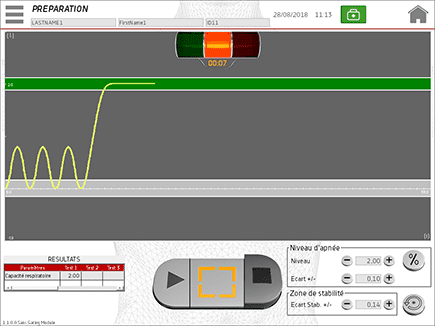
Breathing-assisted radiotherapy using voluntary apnea with the Dyn'R® system is an innovative yet robust technique that represents a major advance in the treatment of breath-mobile tumors.
In practice, it makes it possible toimmobilize the target to be treated in a reproducible manner. This means that the immobilized volume can be treated as close as possible to its limits, thus reducing unnecessary doses to the patient.
A guarantee of tolerance and reduced side-effects, and even the risk of secondary cancer in the long term.
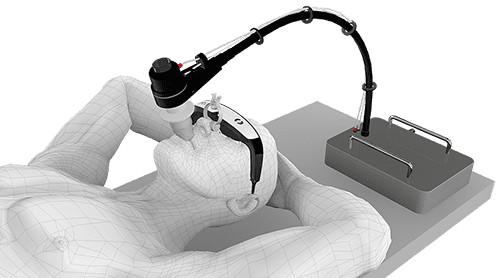
This technique requires the participation of the patient, who, equipped with a spirometer and goggles, will block his breathing for a few tens of seconds during irradiation at an amplitude level visible in the goggles.
Handlers see the same thing from their desks, and can start and stop treatment at the beginning and end of immobility.
The acquisition of this equipment was entirely financed thanks to the exclusive support of donors
The Centre Baclesse would like to extend its warmest thanks to everyone involved in this project.
We have acquired this new technique thanks to the exclusive financial support of generous donors:

The Lions Clubs of the Normandy district, who organized themselves collectively to support this project. They raised €28,000 for the project. The Fondation des Lions de France contributed a further €4,000, for a total donation of €32,000. The following Lions took part in the operation:
→ Saint-Lô
→ Isigny Carentan
→ Caen Viking
→ Granville
→ Vimoutiers
→ Honfleur
→ Avranches
→ Bayeux
→ Domfront
→ Flers
→ Bagnoles de l'Orne
→ Vallée d'Auge
→ Coutances
→ Elbeuf
→ Mortagne au perche
→ Vallée d'or Bolbec Lillebonne
→ clubs in zone 31 (around Evreux)
→ clubs in zone 21(around Le Havre)
→ Deauville-Trouville
→ Sainte-Adresse
→ Falaise

The Cherbourg Heart and Cancer Association , which has offered to contribute €15,500 to the project.

The Tulipes Val-ès-Dune association, which donated €8,000.
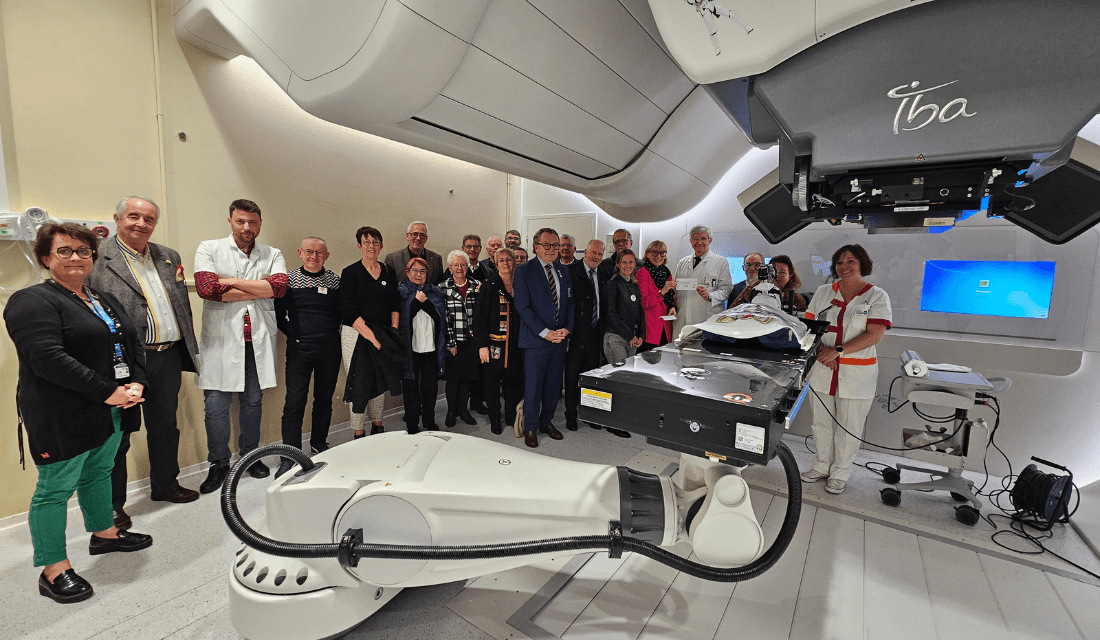
A tour of the proton therapy treatment room, with commentary by Pr Jacques BALOSSO, head of the radiotherapy and proton therapy department, as well asa demonstration of how the equipment works, was organized on Wednesday November 22, 2023, with representatives of the 3 associations.