
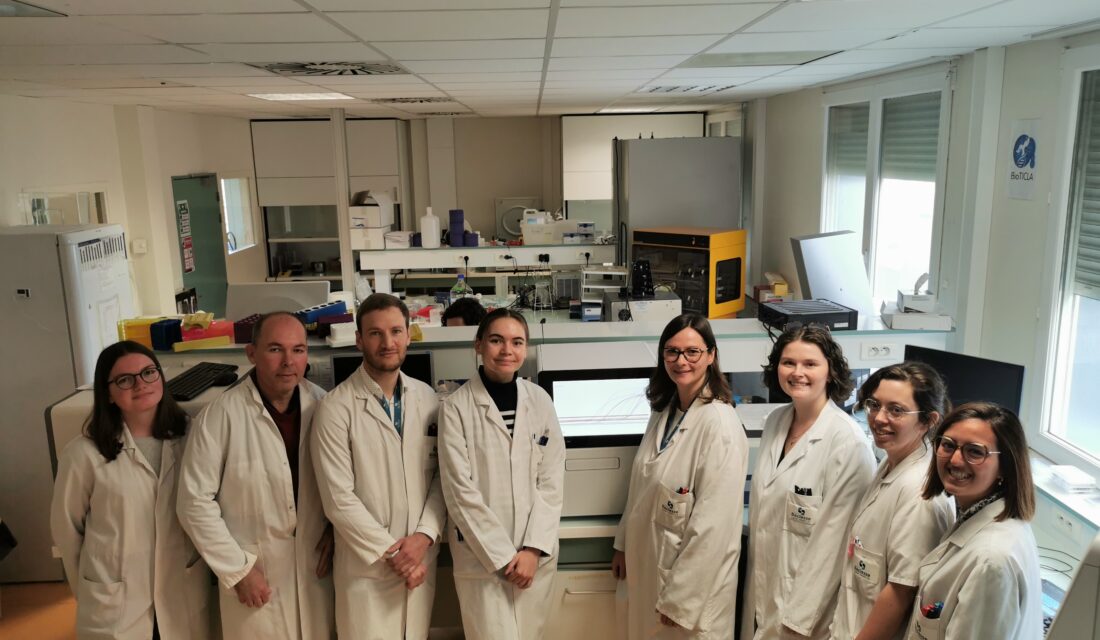
Gaining a better understanding of why some patients respond to treatment while others do not: this is the goal of the OrgamiR research project, developed at the Baclesse Center by teams from the BioTICLA laboratory withinthe Inserm ANTICIPE unit.
In the face of treatment-resistant ovarian cancers, research is now focusing on precision medicine, which can tailor therapies to each patient’s profile. To this end, researchers are seeking to identify “biomarkers”—biological indicators that can predict a treatment’s effectiveness even before it is administered.
microRNAs: promising small molecules
The OrgamiR project focuses specifically on microRNAs (miRNAs), very small molecules that occur naturally in cells and in the blood. These molecules play an important role in the development of cancers and in how tumors respond to treatment.
Their presence in biological fluids and their high stability make them particularly promising biomarkers. Eventually, they could lead to the development of simple, minimally invasive blood tests to help doctors choose the most appropriate treatments.
The team’s previous work has identified an initial blood biomarker associated with the response to certain chemotherapy treatments. These findings have led to a scientific publication, a patent, and several international collaborations aimed at confirming its clinical value.
"Mini-tumors" to better understand cancer
Tumoroids are 3D models grown in the laboratory from patients’ tumor cells. Because they closely resemble the original tumors, they allow researchers to test treatment responses under conditions that closely mimic real-world clinical settings. At the Baclesse Center, more than thirty ovarian tumoroid lines have already been developed thanks to collaboration between the surgery, pathology, and research teams and the ORGAPRED platform. These models offer new opportunities to rapidly identify predictive biomarkers and accelerate the development of innovative treatments.
Research in the Service of Precision Medicine
The goal of the OrgamiR study is to ultimately enable more personalized care for ovarian cancer by identifying biomarkers associated with response to innovative treatments more quickly .
This approach could enable each patient to:
- To better guide treatment decisions
- To avoid certain ineffective treatments
- To improve the chances of responding to treatment
- To minimize unnecessary side effects
This approach is fully in line with the personalized medicine of the future, which aims to provide each patient with a treatment tailored to her condition.
This translational research project draws on the combined expertise of the teams at the ANTICIPE laboratory, the ORGAPRED platform, and the clinical departments at the Baclesse Center, all of which are deeply committed to cancer research.
Beyond scientific advances, OrgamiR exemplifies the Center’s commitment to developing research that directly benefits patients, by bringing the laboratory and clinical care ever closer together.
A project supported by donations
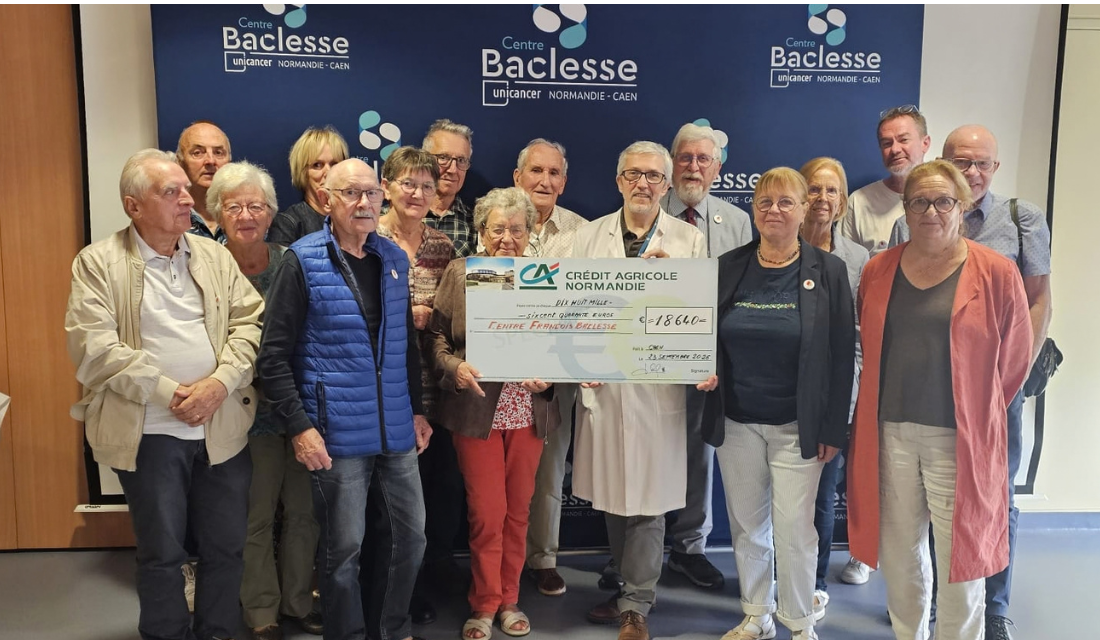
The OrgamiR project is supported by the generosity of donors to the Baclesse Center. The donations collected help cover the costs of biological analyses, laboratory supplies, and the technologies needed to identify new biomarkers. By supporting research at the Baclesse Center, donors directly contribute to advancing personalized medicine and offering new treatment options to patients.
The Baclesse Center extends its heartfelt thanks to all of its donors for their commitment to cancer research and innovation.