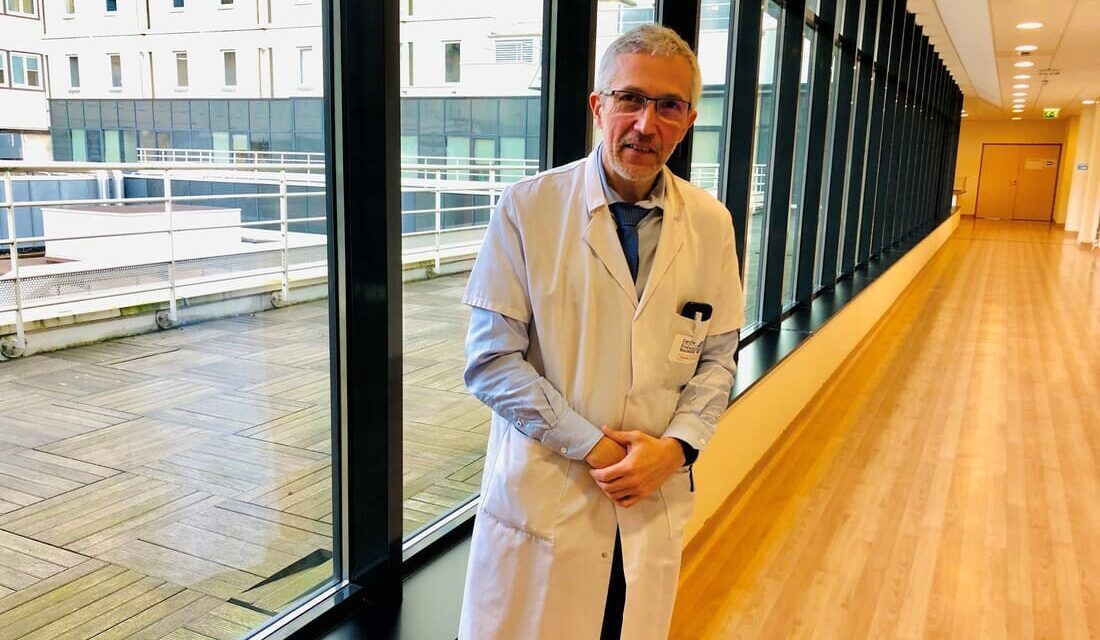
Roman Rouzier, a university professor specializing in breast and gynecological cancer surgery, joins the teams at Caen's François Baclesse Cancer Center. He takes over as head of the surgery department and becomes the facility's Scientific Director in February 2022.
Pr Roman Rouzier's career
Professor Rouzier began his career as a gynecological surgeon in Paris. He then spent 2 years in the United States, at MD Anderson Cancer Center (University of Texas), the world's No. 1 cancer hospital (according to Newsweek). Appointed Professor of Universities and Hospital Practitioners (PU-PH) in 2008, when he was working at the Tenon Hospital, he became Deputy Director of the Institut Curie - Saint Cloud, where he coordinates the medical, scientific and architectural project. At the same time, he resumed his management studies, graduating top of his class from the X - Ecole Polytechnique executive master's program in 2018. He has recently joined the Centre Baclesse teams as Head of the Surgery Department and Scientific Director.
Head of the Department of Surgery and Scientific Director, Centre Baclesse
At Baclesse, Pr Rouzier is involved in writing the 2023-2027 scientific project. " It's an exciting project, because it requires us to take stock of all the forces at work," he explains.
Among the obvious ideas of the future scientific project will be patient care paths that integrate local players to a greater extent, while maintaining the Center's added value, i.e. access to innovation and research. The aim is to generate greater healthcare democracy.
He shares a vision of research that extends from the laboratory to the patient's bedside.
" We're made to do research, it's written into our 3 missions: care, teaching, research ", he points out. " We're home to several research nuggets at Baclesse, and I'd like to mention at least two of them: the ORGAPRED platform and proton therapy ", he continues.
The ORGAPRED platform of the University of Caen Normandie, hosted by the François Baclesse Center within the Inserm Unit U1086 ANTICIPE, is designed to test treatments on microtumors generated in the laboratory.
Proton therapy, carried out at the Cyclhad site of the Centre d'hadronthérapie de Normandie, is an innovative form of radiotherapy designed to improve treatment efficacy and limit toxicity.
Prof. Rouzier's ambitions as scientific director are to continue to participate in 5 major projects:
- Quality of life during and after cancer, commonly referred to as "survivorship": "We are already well identified as one of the major players with Prof. Florence Joly's work on quality of life, and we need to continue this research.
- External radiotherapy and internal vectorized radiotherapy. The latter can be used to identify tumor targets, for highly specific imaging, or to administer a therapeutic agent.
- Oncogenetics: The Cancer Genetics Laboratory at the Centre François Baclesse is France's leading laboratory for the molecular diagnosis of genetic predispositions to breast and ovarian cancers. "We must maintain this position and integrate liquid biopsies".
- Epidemiology: " This public health research is part of prevention and screening, but it must also become interventional, i.e. it must modify the involvement of women and men and the history of their illnesses ".
- Academic and pharmaceutical research in collaboration with industry : " We need to be leaders in our flagship organs, and give patients access to innovation ".
The patient is at the heart of our concerns: " The Center's DNA is to focus on the patient, the human element, research and access to innovation," he concludes.