Surgical techniques for breast cancer are evolving with a single goal in mind: to ensure oncological safety while minimizing, whenever possible, the physical consequences of the procedure. Since July 2025, the Baclesse Center has been offering certain patients an endoscopic subcutaneous mastectomy, a minimally invasive technique that is still rarely performed in France. Eighteen procedures have been performed to date at the Center.
A scar that is offset and small
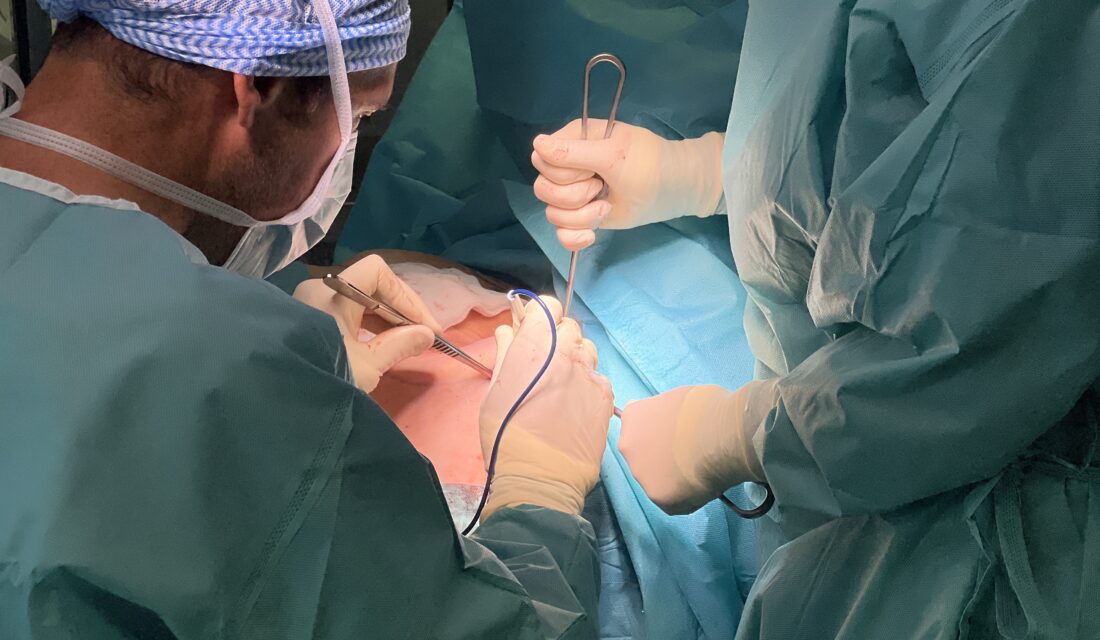
Endoscopic mastectomy allows for the removal of the breast gland while preserving the skin, areola, and nipple. The surgeon performs the procedure using a camera and laparoscopic instruments inserted through an incision of about 4 to 5 cm located on the outer part of the breast, which helps to position the scar off-center and minimize its visibility. The procedure is combined with immediate breast reconstruction using an implant.
Originally offered at Baclesse as part of prophylactic surgery for women with a genetic predisposition to breast cancer, this technique is now available to certain patients with cancer. However, it is not suitable for all situations: its use depends, in particular, on the characteristics of the tumor and the morphology of the breast.
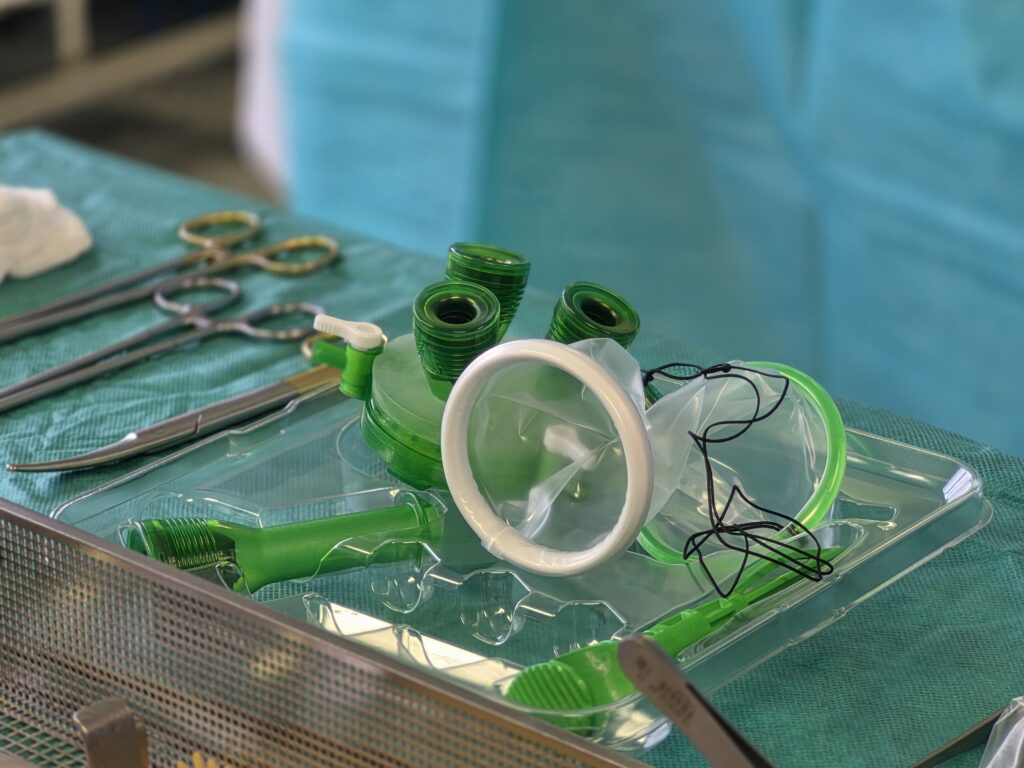
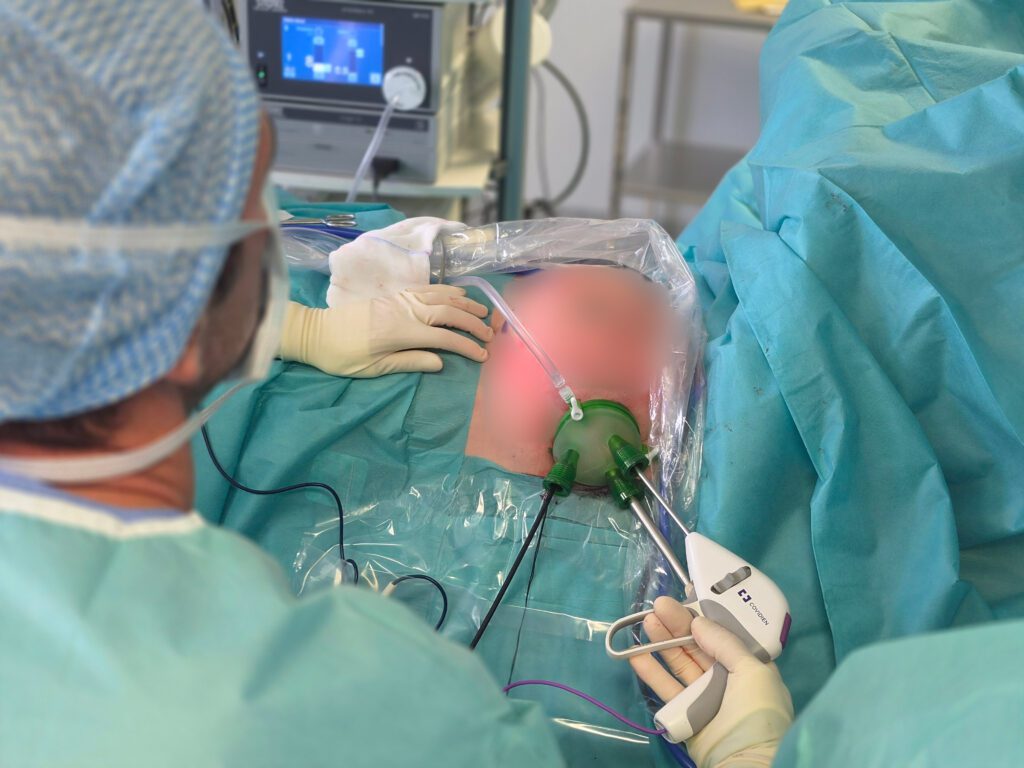
An Additional Technique for Personalizing Surgery
This new approach complements the various breast surgery and reconstruction options offered at Baclesse, whether performed immediately or at a later stage: prosthetic reconstruction, dorsal flaps—total, partial, or “mini-dorsal”—lipomodeling, or DIEP (Deep Inferior Epigastric Perforator, or abdominal flap, in French) reconstruction.
The goal is not to favor one technique over another, but to be able to offer each patient the solution best suited to her medical condition, body type, and preferences.
A promising technique that still needs to be evaluated
Endoscopic mastectomy requires more operating time and specialized equipment. As a result, it entails additional costs associated with this surgical approach, which are not specifically covered by health insurance.
Beyond its potential to minimize and reposition the scar, several other potential benefits must now be evaluated: postoperative pain, recovery, complications related to reconstruction, the need for revision surgery, and the quality of the aesthetic outcome.
“We believe this minimally invasive approach can provide real benefits to patients, beyond just the scar: less pain after surgery, potentially fewer complications or repeat surgeries, and an easier recovery. But our role is precisely not to settle for a clinical impression—we must demonstrate this scientifically. That is why we are preparing a study that will compare this technique to conventional surgery, evaluating surgical and oncological outcomes, pain, complications, patient satisfaction, and the medico-economic impact,”says Prof. Roman Rouzier, executive director of the Baclesse Center and a surgeon.
The Baclesse Center is also participating in a registry with the teams of Dr. Gauthier Rathat, a gynecologic and breast surgeon at the Montpellier University Hospital, who pioneered this technique in France. In addition, the Center is preparing a study based on its own data to compare the results of this new approach with those of conventional techniques.
The challenge is to obtain objective data on its benefits for patients, its oncological safety, and its medical and economic costs, in order to determine precisely what role this approach might play in the future of breast cancer surgery.
Activities for 2025
| Breast Surgery Procedures for Cancer | Number |
| Partial mastectomies/lumpectomies | 855 |
| Total mastectomies without immediate breast reconstruction (IBR) | 144 |
| Mastectomies with prosthetic RMI | 174 |
| Mastectomies with RMI and abdominal flap reconstruction (DIEP) | 19 |
| Mastectomies with RMI and dorsal flap reconstruction | 13 |
A Closer Look at Endoscopic Mastectomy
The technique has been in use at the François Baclesse Center since late July 2025.
| Number of interventions | |
| 2025 | 4 |
| 2026, dated October 9, 2026 | 14 |
| Total since July 2025 | 18 |
Source: Internal data from the François Baclesse Center—extracted from the surgical scheduling software and PMSI data, September 2026.