
As soon as night falls, your vulnerability increases
Less than 10% of bicycle journeys are made at night, but they account for 20% of personal injury or fatal accidents(Bilan Sécurité Routière 2018).
Nearly 1/3 of rush-hour accidents occur when it's dark. It's also when 50% of cyclists are denied the right of way. Motorists involved in accidents usually say they didn't see the cyclist.
Seeing and being seen is more than regulatory, it's vital.
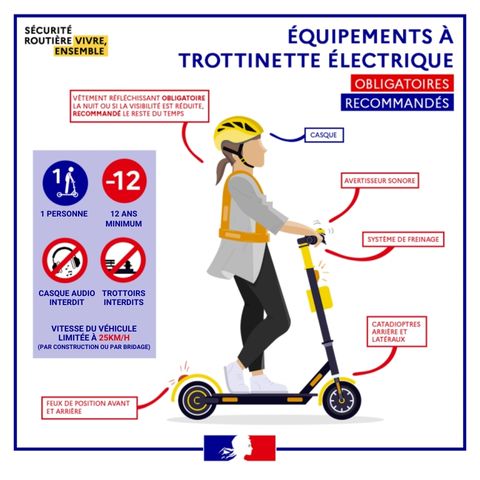
Cyclists and scooterists often think they're being seen because street lights or store windows are on. They think they don't need lighting. However, cyclists and scooterists without lighting are not visible.
Indeed, cyclists and scooterists can see the street and cars, but without lighting, they are not seen or are seen only at the last minute by other road users.
That's why being seen is vital for the safety of active and soft mobility users (cyclists, pedestrians and scooter users). Essential at night, lighting is also essential during the day, when rain and fog render visibility inadequate.
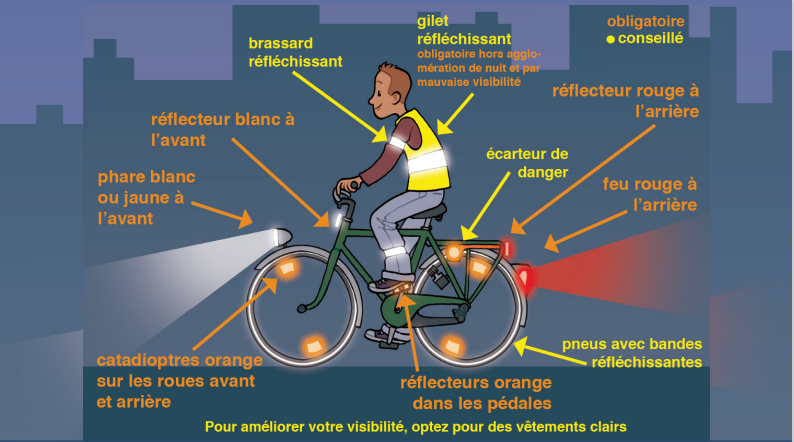
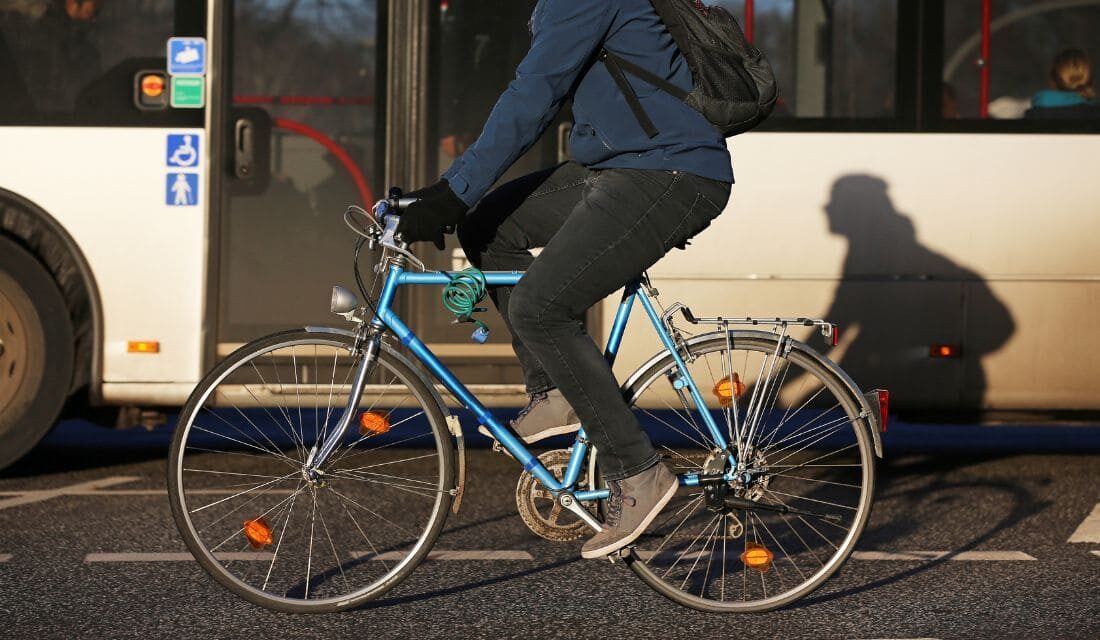
How can I be clearly seen at night on my bike?
Mandatory equipment (orange) and recommended equipment (yellow):