
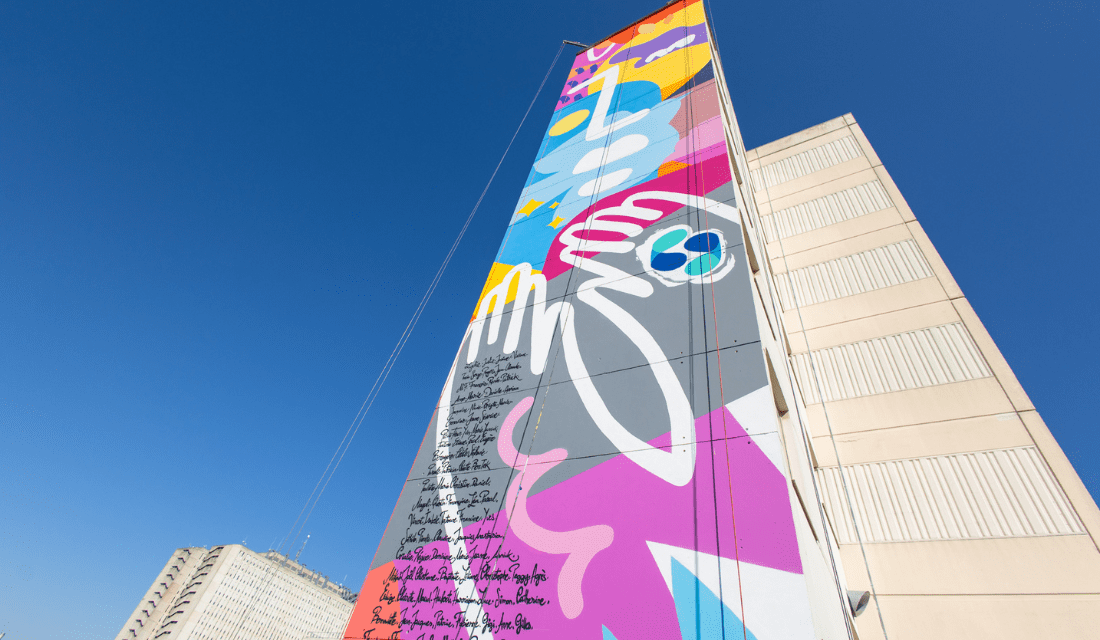
To mark the 50th anniversary of the Centre Baclesse building, a gigantic fresco was inaugurated on September 14, 2023. A tribute was paid to Prof. Jacques-Séverin ABBATUCCI, who headed the Centre for 18 years: the amphitheatre will now bear his name.
A number of personalities expressed their views on the historic role played by the Centre Baclesse in Normandy:
- Prof. Roman ROUZIER, General Manager of the Centre
- Mr Séverin ABBATUCCI, son of Pr Jacques-Séverin ABBATUCCI
- SoLiCe, the graffiti artist who created the 32-metre-high fresco
- Mr Thomas DEROCHE, Director General, Agence Régionale de Santé de Normandie
- Mr Stéphane BREDIN, Regional Prefect
Building history
In 2023, the Centre Baclesse building celebrates its 50th anniversary, and in 2025, it will be the centenary of the fight against cancer in Caen. Indeed, the first patient to be treated with radiotherapy in Caen was in 1925.
In 1925, the Prefect of Calvados approved the internal regulations of the Centre Anticancéreux de Caen (C.A.C.), created that same year on the decision of the Minister of Public Health, Paul Strauss, who wished to have a C.A.C. in every major university town in France. In practice, the C.A.C. was organized as a specialized department of the Centre Hospitalier Régional Clémenceau, and was housed in Pavillon 2. It was run both administratively and medically by hospital staff. The C.A.C. is run by the medical director and specialist doctors, in addition to their duties at the hospital.
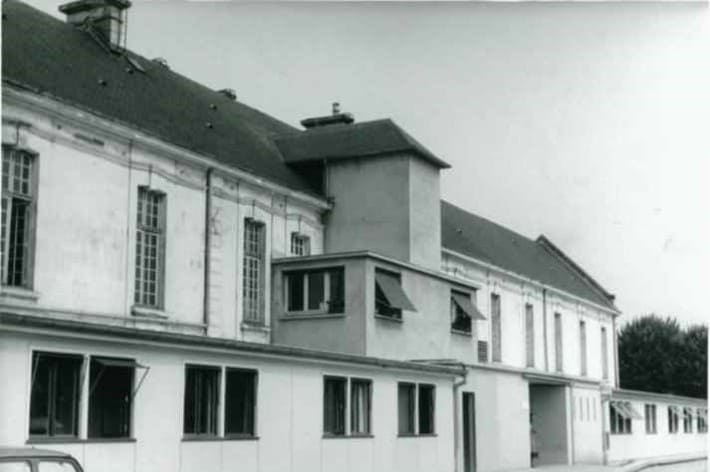
In September 1939, Pavillon 2 was requisitioned by the army, and by the end of the war it was dilapidated and unusable, requiring extensive refurbishment.
It wasn't until 1952 that the C.A.C. de Caen gradually took possession of its premises in Pavillon 2, under the direction of Dr. Pierre Jacob. It treated 203 new patients with a small conventional radiotherapy machine and 400 mg of Radium, 200 mg of which had been donated by Belgium to the University. In December 1952, thanks to a grant from the Ministry of Public Health, the Center was able to install a new contact radiotherapy unit. Pavilion 2, refurbished by the hospital administration, has 50 beds in 10 rooms.
Meanwhile, in 1945, General De Gaulle, President of the Provisional Government of the Republic, signed an ordinance defining the organization of regional cancer centers. The ordinance laid the foundations for the organization of cancer centers:
- Private non-profit establishments
- Participating in public service
- Can receive donations and legacies to finance their research and development
- The Board of Directors is chaired by the Préfet de Région.
- The Director is appointed by the Minister of Health.
In 1955, the C.A.C. obtained a subsidy from the French social security system to acquire a new radiotherapy machine for cyclotherapy and orthokinetic radiotherapy, two of the most recent techniques. Medical activity increased, and the C.A.C. was soon faced with a shortage of premises and beds. Plans emerged between 1952 and 1959 to address the issue, but they would not see the light of day for major reasons such as the reconstruction of the entire city of Caen and the shortage of both premises and land in the hospitals themselves.
1956: the C.A.C. welcomed a new doctor, Dr. Jacques-Séverin Abbatucci, who had been initiated into modern radiotherapy and was to introduce Cobalt treatment to Caen.
1964: Caen's C.A.C. passes the 1,000 new patient mark, ahead of Bordeaux and Nantes, and immediately after Marseille. Temporary wooden barracks were set up near Pavillon 2 to house consultations and administrative services, freeing up the first floor of the pavilion for additional beds.
1970: C.A.C. becomes Centre François Baclesse, with 111 beds, 150 employees and 20 doctors, 12 of them full-time. Everyone's energy was focused on building a new center, under the control of a new medical director, who happened to be the establishment's oldest and most experienced doctor: Dr. Abbatucci.
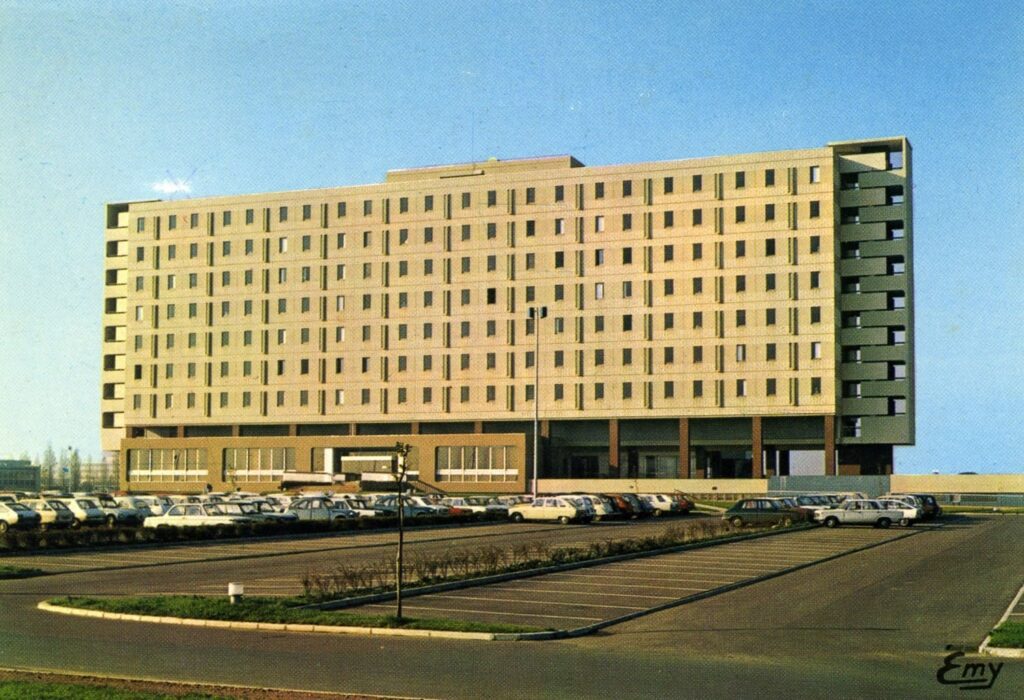
1973: the Center's new building, constructed in 2 years, opens on the hospital site on rue de Lébisey in Caen, next to the Caen University Hospital. The new center treats 2,300 patients, has a staff of 525, including 40 doctors, and 279 beds, with a major technical platform providing full diagnostic and treatment capabilities. It was inaugurated in 1975 by the French Minister of Health, Mme Simone VEIL, in the presence of the Director of the Centre François Baclesse, Pr ABBATUCCI.
Activity at December 31, 1973 :
- 279 hospital beds divided into 1- and 2-bed rooms
- External consultations organized into 6 committees
- 2,340 new patients
- 439 employees
Tribute to ABBATUCCI
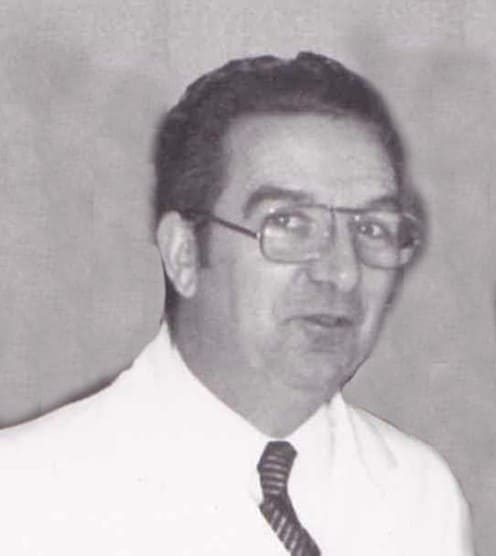
This anniversary is also an opportunity to pay tribute to Professor Jacques-Séverin Abbatucci.
Professor Jacques-Séverin ABBATUCCI headed the Centre Baclesse from 1970 to 1988. He passed away in 2020. Those who knew him well in Caen remember him as a man of great modernity and vision.
In 1956, Jacques-Séverin Abbatucci was hired as a radiotherapist by Doctor Jacob, who was then head of the Centre anticancéreux de Basse-Normandie.
With a team of pioneers including Drs. Quint, Bloquel, Roussel and Delozier, he published a veritable memento for all French-speaking radiotherapists, a work nicknamed "Le ABBATUCCI". There were, of course, many other publications and contributions to national and international exchanges.
Pr Jacques-Séverin ABBATUCCI was a visionary. The Centre Baclesse owes its medical organization to him, with its multi-disciplinary committees, which would become mandatory in cancerology 30 years later. He was also the driving force behind a policy of comprehensive patient care, with the creation in 1975 of support services including the pioneering social service, set up two years earlier, as well as dietetics, speech therapy, palliative care and pain services. His passion for innovation naturally led him to invest early in the field of information technology , enabling the Centre François Baclesse to be one of the first hospitals to computerize a shared medical record, as early as 1985!
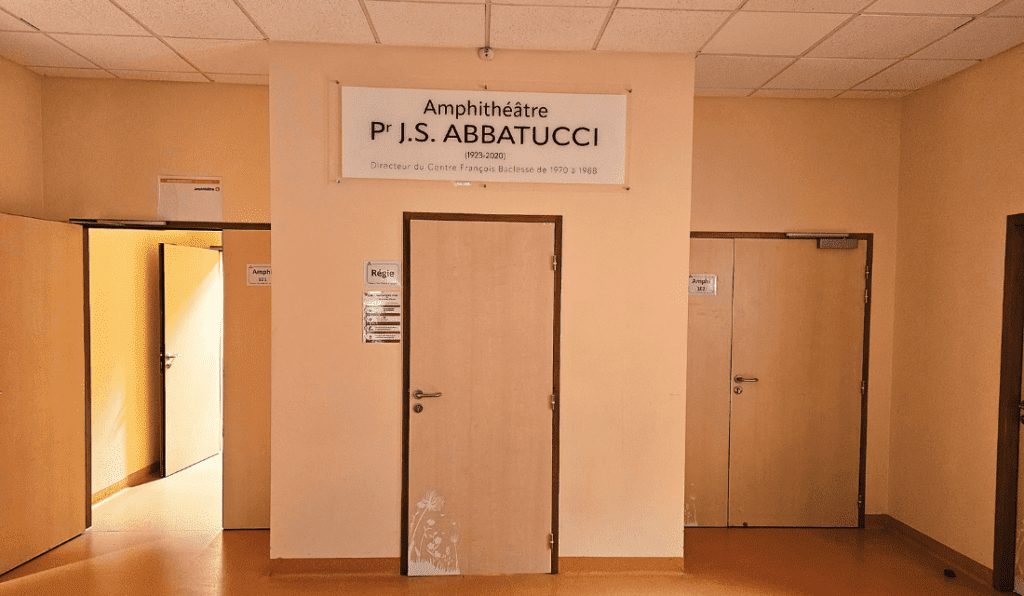
All his life, he sought to preserve the human imperative. The Centre's staff salute this commitment by naming the amphitheatre "Amphithéâtre Jacques-Séverin Abbatucci".
Upcoming project and a new research building
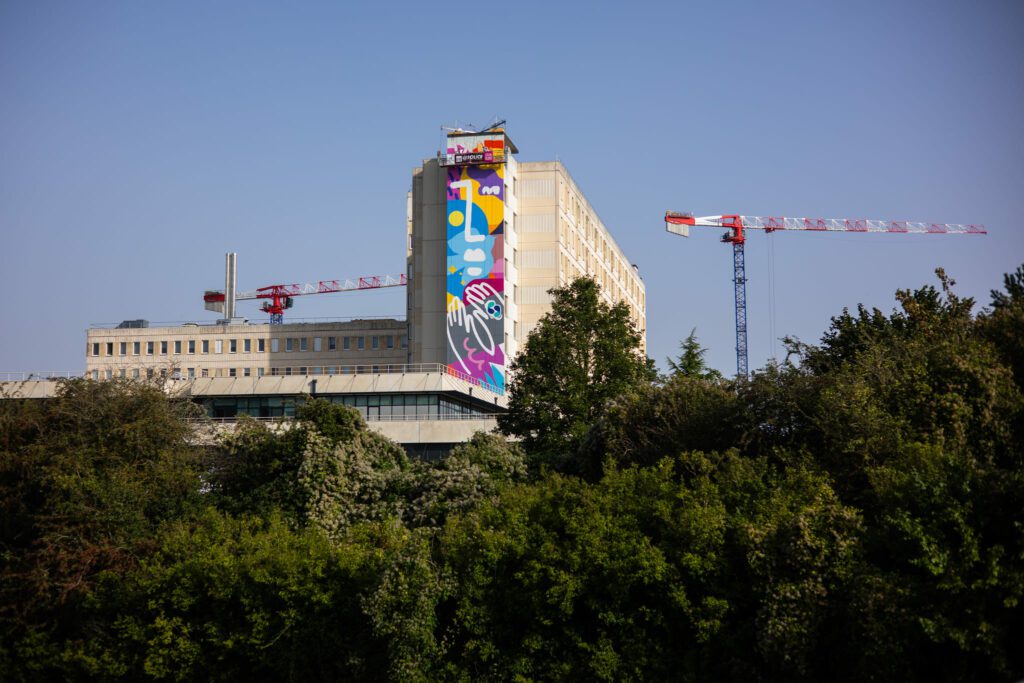
The building is 50 years old, and the Centre wanted to give it back its visibility and uniqueness for years to come. It called on graffiti artist SoLiCe to create a gigantic fresco on the building's south facade. It's the tallest fresco in Normandy! It depicts support, research, humanism, care and hope. But everyone can make their own reading.
Cancer can only be beaten with the help of a wide range of players, including the university, Caen University Hospital and local hospitals, and with the support of the relevant authorities. The public health challenges are considerable: cancer is the leading cause of premature death in France. One man in 2 will develop cancer in his lifetime, and one woman in 3. Normandy has a 6% higher cancer mortality rate than the national average. There is a lot of work to be done in the region, and the excess mortality rate from cardiovascular disease is between 10% and 20%. The Centre's aim is to strengthen the dynamics of partnerships and territorial cooperation, with a holistic approach to prevention in the service of its fellow citizens.
Today, the Centre Baclesse also has major projects on the horizon, including a new integrated research building. Every year, the Centre's healthcare activity grows, as does its research activity. Researchers are cramped in their current premises. Automated organoid transplantation machines, laboratories, DNA sequencers, the biotheque and tumour library are taking up more and more space, and all the better for the future of research.
Today, the Baclesse Center is...
The Centre de lutte contre le cancer (CLCC) François Baclesse is a not-for-profit private hospital of public interest (ESPIC), providing comprehensive care for cancer patients, with no out-of-pocket expenses or excess fees. Like the 18 other CLCCs in the Unicancer network, Baclesse has a triple public service mission: care, teaching and research.
A-certified by the Haute Autorité de Santé, the highest level of certification, CLIP² accredited by the Institut National du Cancer, the only center in Normandy authorized to carry out early-phase clinical trials, and accredited as a European Comprehensive Cancer Center by the OECI, the Center offers excellent cancer care in Normandy. It has also been ranked by Newsweek magazine as one of the world's top 100 hospitals for cancer care.
Over 27,000 patients are treated each year for all types of cancer. At the cutting edge of innovation, and based on a patient-centered multidisciplinary organization, Baclesse boasts one of the most comprehensive radiotherapy technical platforms in France, and is one of only three facilities in the country to have a proton therapy gas pedal.