
Cognitive difficulties (particularly memory and concentration problems) are frequently reported by patients undergoing cancer treatment. To better understand these symptoms and offer tailored solutions, a research team at the Baclesse Center (INSERM U1086 Anticipe, the Cancer and Cognition platform of the Cancéropôle Nord-Ouest andthe PLATON Service Unit, University of Caen Normandy) is developing CogBOOST, an innovative digital program designed to improve these cognitive difficulties.
Led by researchers, clinicians, and cognitive scientists, this project is part of an ambitious initiative: to provide personalized, scientifically validated support to alleviate the cognitive difficulties associated with cancer and its treatments.
Gaining a Better Understanding of Cancer-Related Cognitive Difficulties
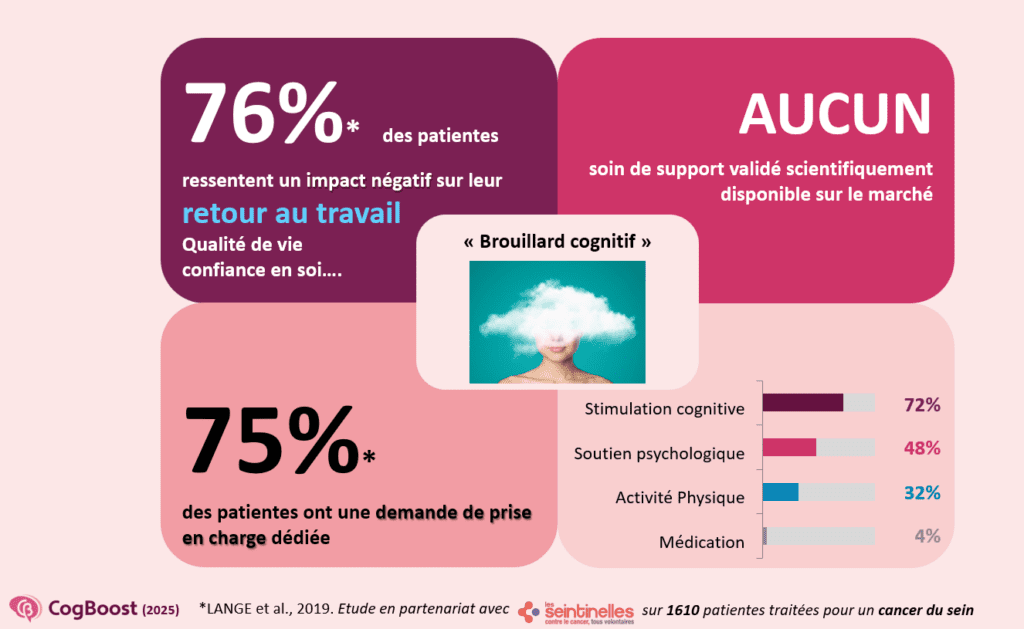
Many patients report cognitive difficulties following treatment: problems with memory and concentration, a feeling of being slowed down, and difficulty following a conversation or finding the right words. These symptoms, sometimes referred to as “cognitive fog, ” can affect daily life and hinder a return to work. Among women treated for breast cancer (particularly with chemotherapy and/or hormone therapy), nearly 75% report these difficulties (Survey by the “Les Seintinelles” association: Lange et al., 2019). Despite this common issue and the need for targeted intervention on the part of patients, there are few scientifically validated supportive care options available to address these difficulties.
Expertise of the team behind this project
At the Baclesse Center, these issues have been the focus of research for over 15 years within Theme 2, “Living with Cancer” (led by Prof. Florence JOLY), ofInserm Unit 1086 ANTICIPE, and have garnered national and international recognition. The research team focuses on assessing these challenges and gaining a better understanding of the underlying mechanisms, which often result from a combination of factors: treatment effects, fatigue, emotions, biological and genetic factors, and lifestyle.
CogBOOST: a personalized digital journey
It was against this backdrop that CogBOOST was launched—a digital program designed to support breast cancer patients experiencing cognitive difficulties.
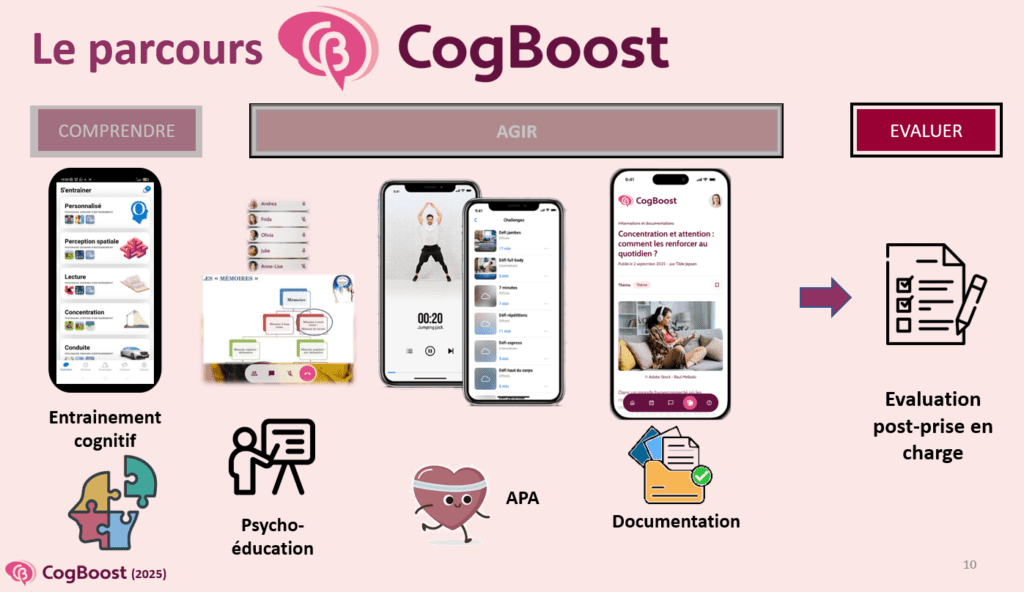
Developed with input from patients and healthcare professionals, CogBOOST offers a personalized, supervised program that combines several types of interventions (see the illustrated program below):
• Cognitive training exercises
• Psychoeducation (information provided by a professional to better understand cognitive fog and offer tips for daily life)
•Adapted physical activity (APA) supervised by a professional and performed independently
• Resources to better understand cognitive difficulties
“Today, cognitive difficulties following breast cancer are still too often ignored or downplayed. This project addresses a real and largely unmet need by offering a concrete, accessible, and personalized solution. It aims to identify these difficulties earlier, provide better support to the women affected, and improve their quality of life,” said Marie LANGE.
Innovation driven by research
The CogBOOST project is firmly rooted in a scientific approach. Following a design and technical development phase, the team is preparing to move to the next stage with a pilot phase scheduled for early 2027. Approximately 30 women undergoing treatment for breast cancer will test the program.
This first step will allow us to analyze usage patterns, assess participant engagement, and adjust the program’s content.
Ultimately, a larger-scale national study is planned for late 2027 (supported by the National League Against Cancer) to scientifically assess the program’s benefits, particularly regarding cognitive difficulties and return to work.
The goal is to have CogBOOST recognized as a medical device, which would ultimately enable broader coverage and distribution for the benefit of patients.
A project supported by numerous partners
The development of CogBOOST involves several institutional and financial partners. In particular, the project is supported by the Normandy Region, Normandie Incubation, and the National League Against Cancer.
In 2023, research on the topic of “Cancer and Cognition” was recognized with the Pink Ribbon Grand Prize for Research, a lifetime achievement award. The funding received helped support the development of the CogBOOST program, with more recent support from the AstraZeneca laboratory.
This funding has made it possible to support an ambitious research and development program, with a total cost exceeding one million euros.
The Future of CogBOOST
While CogBOOST is currently being tested in women undergoing treatment for breast cancer, researchers are already considering expanding this approach to other types of cancer or medical conditions.
“Cognitive difficulties following cancer remain an issue that is not sufficiently addressed in the care pathway. With CogBOOST, we aim to develop an innovative, personalized, and scientifically validated approach capable of providing long-term support to patients in maintaining their quality of life after treatment.” Prof. Florence JOLY.
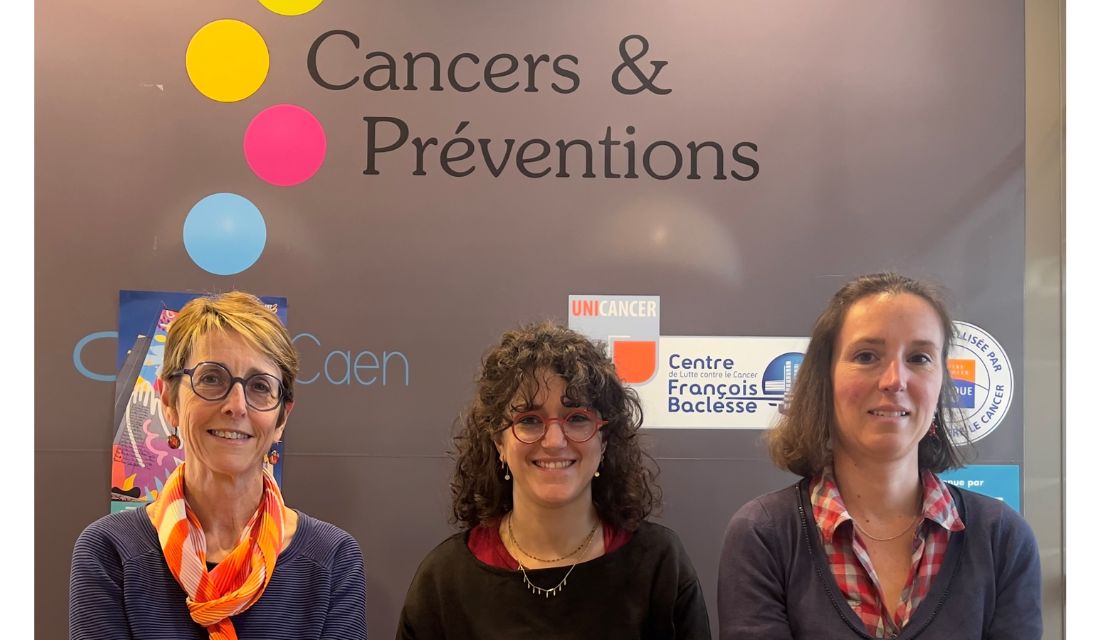
- In the photo, from left to right: The CogBOOST project team: Dr. Florence JOLY (medical oncologist), Mylène DUIVON (researcher), Marie LANGE (research neuropsychologist)