
Organoids offer hope for better treatment adaptation
Since January 2023, the Centre Baclesse in Caen has been running an innovative clinical trial called TRIPLEX, focusing on the use of tumor organoids to better understand and treat triple-negative breast cancer, a particularly aggressive form of the disease.
A difficult-to-treat cancer
Triple-negative breast cancer accounts for around 15% of breast cancers diagnosed each year. It is characterized by theabsence of hormone receptors and overexpression of the Her2 protein, which limits treatment options. It often affects young women and carries a high risk of recurrence, with 20-30% of patients developing metastases despite a sometimes favorable initial response.
TRIPLEX's ambition: to personalize treatments
The TRIPLEX trial is based on a promising technique: organoids, mini-tumors grown in the laboratory from tumor samples taken from patients. These 3D models have the advantage of being very similar to the patient's original tumor and could enable rapid testing of different treatments outside the human body, an approach known as "ex vivo."
Nevertheless, before any clinical use, experimental validations must be carried out to prove that organoids have a similar response to treatment as patients. This is the aim of the TRIPLEX trial, which aims to compare the response of organoids and patients.
Two years of research, first lessons learned
The TRIPLEX study is divided into two main stages:
- Creation of a biobank: collection and storage of tumor and blood samples, processed by the ORGAPRED platform and the Tumorothèque de Caen Basse-Normandie.
- Ex vivo tests: analysis of organoid response to reference treatment for triple-negative breast cancer and comparison with patients' clinical response.
Two years after the launch, several observations have emerged:
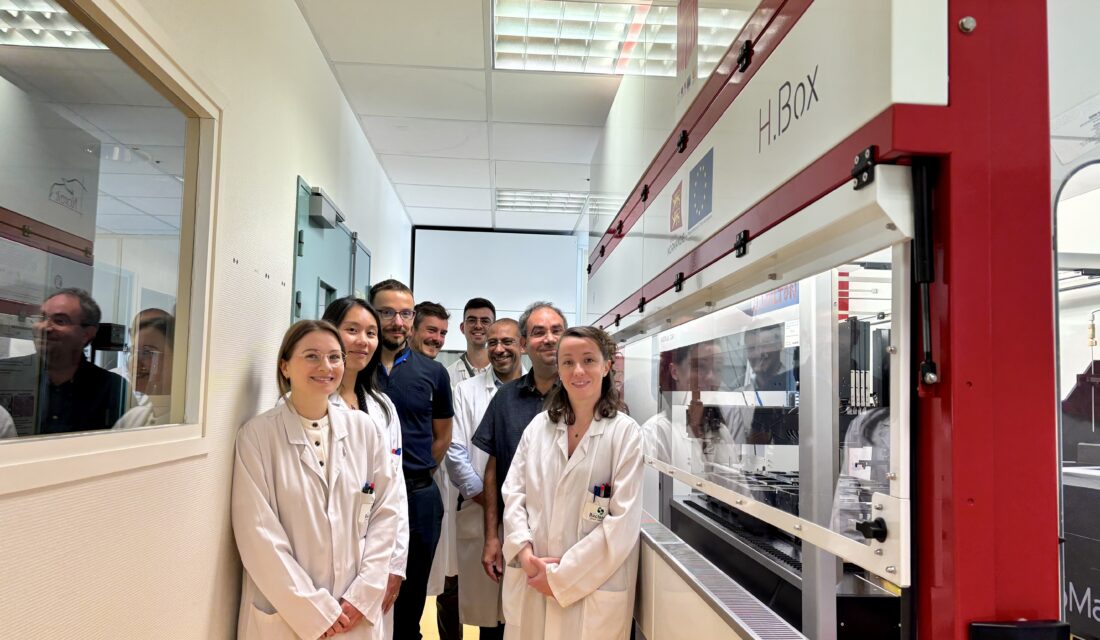
- Organoids can be cultured, but their lifespan remains short (a few weeks). It is therefore crucial to test treatments very quickly after biopsy. The acquisition by the laboratory of a new machine for sorting and miniaturizing tests should enable us to meet this challenge.
- Researchers appear to have identified a biomarker for monitoring the presence of anti-tumor immune cells in patients' bloodstreams. If validated, this biomarker could be used to predict patient response to treatment, complementing the information provided by organoids.
- The concept of a "chemogram" (inspired by the antibiogram used to determine the most effective antibiotic against a bacterium) is now becoming a reality. The aim is to create a functional test to guide chemotherapy based on the actual sensitivity of each patient's tumor.
Adapting research to clinical realities
Initially, TRIPLEX also aimed to develop long-term organoid lines to build up a sustainable biobank. Today, this ambition has been reassessed in favor of the development of tests that can be used rapidly in clinical practice.
- The aim is to transform TRIPLEX into a therapeutic decision-support tool, within a timeframe compatible with the care pathway.
"One of the major challenges for TRIPLEX is to evaluate the ability of organoids to predict patient response to treatment. This would enable us to provide proof of concept for their use in the clinic. If this becomes a reality, we could not only predict each patient's response, but also test additional treatments in the event of a patient failing to respond to standard treatment or relapsing. The organoids could then be used to help clinicians tailor treatments more precisely to individual patients. This is a highly stimulating project, and a crucial step towards truly personalized medicine", explains Jordane DIVOUX, Research Manager at the Centre Baclesse.
Three years later, any updates on the TRIPLEX trial?
The trial continues to employ a new strategy that involves working as quickly as possible with a limited amount of biological material. The acquisition of a new large-particle sorter has enabled the team to meet this challenge and obtain the response of tumor organoids to various treatments in less than a month—approximately five months before the clinical response of the corresponding patients was observed. This new analytical pipeline, if validated, could thus be used to predict patient response well in advance of surgery.
For the year 2025:
- 27 patients were enrolled in the trial
- 11 biopsies resulted in organoids
- A total of 8 "chimiograms" were obtained
Sixty more patients are still needed to complete the trial, which is expected to run through the end of 2027. The goal will then be to determine whether the treatment responses observedex vivoin the organoids match those observed in the patients during surgery.
TRIPLEX will thus help answer the question: “Can organoids be used to predict patient response in the lab? We’ll find out in 2028!”