
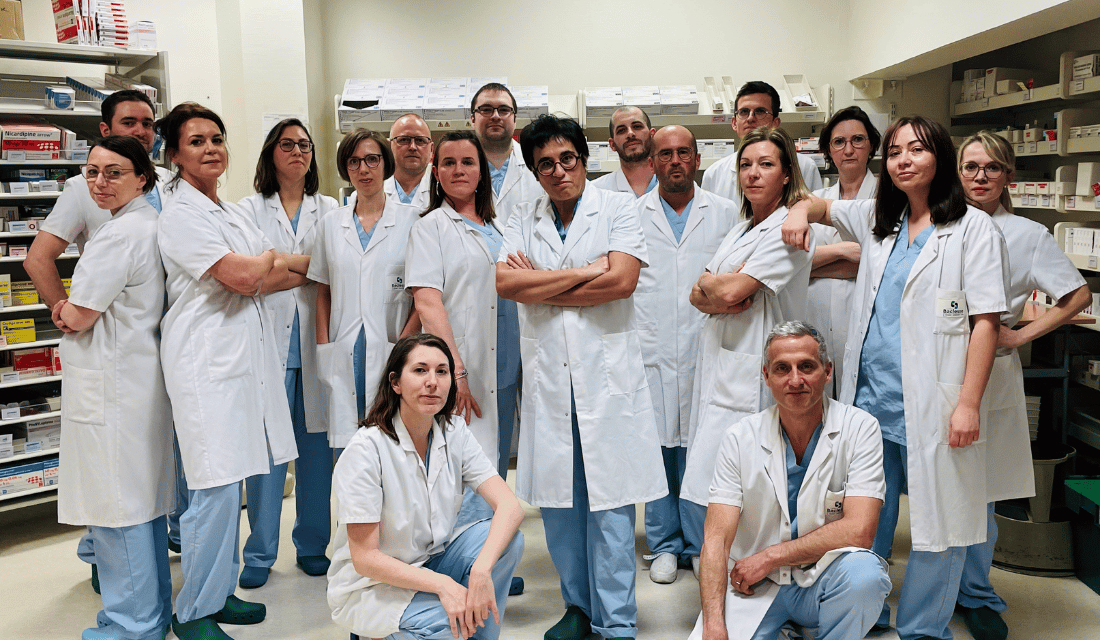
In 2023, the Centre Baclesse is taking an innovative approach by equipping itself with a robot to manufacture injectable cancer treatments, a first for a healthcare facility in Normandy. Preparing this type of treatment is a complex and risky business . In addition, medical advances mean that there is a growing demand for the manufacture of these drugs.
In 2023, the Center welcomed over 27,000 patients, including more than 7,400 new patients. Around 10% of patients received injectable cancer treatments. In 2023, the Center's pharmacy produced over 39,000 injectable treatments, i.e. around 160 preparations per day, 50% of which were prepared by the new robot.
A team at the cutting edge of innovation
"ThOR" stands for Robotic Oncology Therapy, referring to the famous hammer-wielding god from Norse and Viking mythology, linking it to the history of Normandy. It has proven to be a valuable ally for the Center's pharmacy department. Its qualities enable both the secure preparation of treatments and the optimization of production.
Currently used by 6 hospitals in France, the Center's pharmacy team has achieved the best performance in robot use.
His arrival revolutionized the work of the Center's pharmacy team, and within a year of starting up he had become indispensable.
"We can't do without it anymore! It has allowed us to become much more autonomous. There is a sense of fusion with the machine; it's a true companion. If the operator isn't performing well, neither is the robot. In our daily lives, the arrival of the robot has strengthened the spirit of an already very close-knit team. We feel like we're at the heart of a modernization of the service and a great innovation," explains Frédéric Beau, pharmacy technician at the Baclesse Center.
Safe treatment production
ThOR enables treatmentsto be manufactured in a highly secure manner: using the right product at the right dosage for the right patient. How does the robot manufacture these treatments with maximum safety? By being equipped with various sensors capable of identifying all the components used to manufacture the treatment. But also because it incorporates a precision scale to check the accuracy of the dose at all stages of the preparation process. Robotic production offers a real benefit because the robot does not make mistakes.
"The arrival of the robot has brought us a lot of peace of mind in our work," says Frédéric Beau, pharmacy technician at the Baclesse Center.
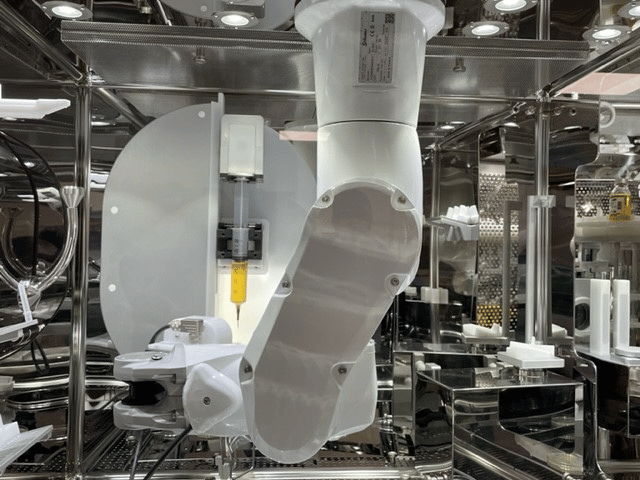
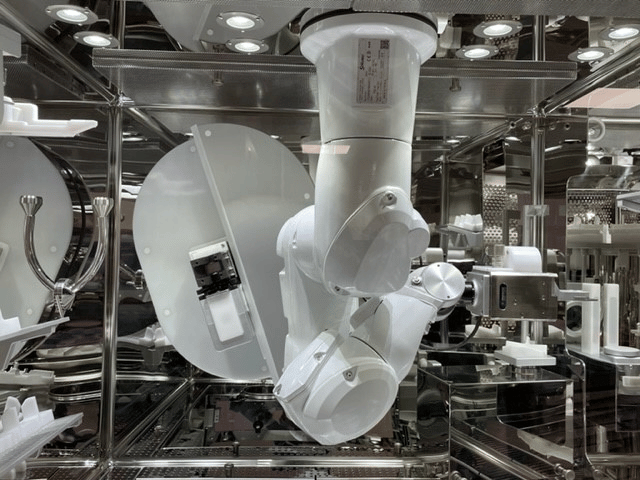
The ThOR robot undergoing treatment preparation
A high-performance ally
Since its acquisition, it has enabled the department to optimize workflow and reduce production times. The robot also meets the growing needs of the Center's outpatient activity. This reduction in treatment delivery times is also linked to the implementation of dose standardization. The robot essentially produces standard doses, covering around 56% of the treatments administered at our facility.
The remaining 44% are "tailor-made" preparations, made by a human operator , for which, for example, the stability of the prepared product is short, i.e., within a specified period of time, its essential properties do not change or change only to a tolerable extent. The patient's clinical condition may also sometimes require an adjustment of the dose to be administered (usually a reduction in dose). Finally, there are less common treatments that also require "tailor-made" preparations.
"It takes about one month to train each operator. The pharmacy has already reached 'plateau' status, meaning optimal use of the robot in just three months, which was a real challenge for the team, who rose to it brilliantly," says Dr. Fabienne Divanon, head of the pharmacy department.
The "cobot," a collaborative robot
Another objective is to provide better protection for staff working in the production unit, by reducing the risks to their health, in particular repetitive movements that can lead to musculoskeletal disorders. It also means reducing the potential risk of chemical contamination. Because his movements are so precise, he generates very little contaminant cloud (risk of releasing particles which settle on treatment pockets). And thanks to this, the nursing staff who administer the bags in hospital wards are just as well protected.
However, the robot does not replace humans because it lacks overall autonomy. It is a collaborative robot, also known as a "cobot, "designed for direct and close interaction with the production team (pharmacy technicians). Unlike a robot that works for humans, the "cobot" works with humans. For example, thecollaborative robotis capable of learning by observation: the operator performs the desired movements with the robot's arm, which remembers these movements and can then repeat them. This enables it to perform much more complex operations. Together, they work toward a common goal, and the robot remains dependent on the operator's intentions, movements, and behavior.
"The pace of working with the robot is very pleasant and comfortable. In particular, we have seen a reduction in musculoskeletal disorders," explains Gwenaëlle LE PORS, pharmacy technician at the Baclesse Center.
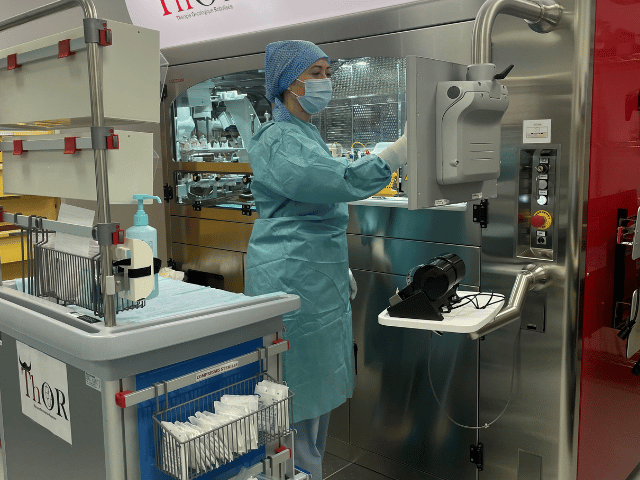
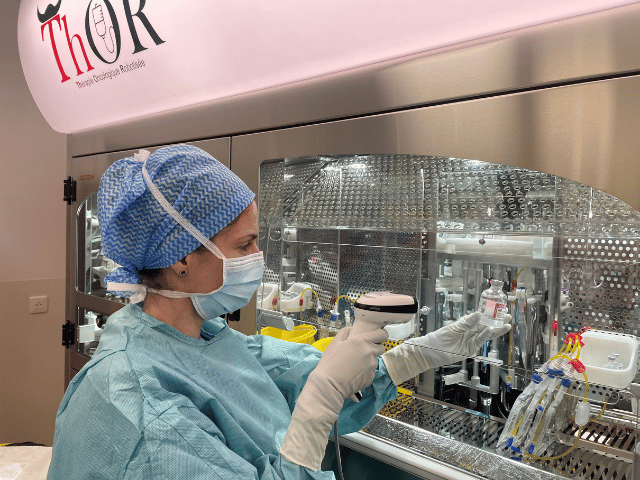
From left to right: Julie CASTEL and Gwenaëlle LE PORS, pharmacy technicians, using the cobot to prepare treatments.
Towards a pharmacy 4.0
Robotization has changed the job of pharmacy technicians. Beyond robotization, this has required digitizing the entire production process, from prescription to traceability of administration. The Baclesse Center is thefirst in France to have interfaced its injectable anticancer prescription software with its "cobot."
"Baclesse's effective use of the robot has led other hospitals using this robot to contact us so that we can share our work organization process with them and they too can maximize their performance. Thanks to this modernization of the pharmacy department, we are now able to meet current and future challenges," says Prof. Roman Rouzier, Director General of the Baclesse Center.
A project to rebuild the pharmacy is currently underway. The aim is to meet the demand for the production of Innovative Therapy Medicines (ITMs), which are currently used in clinical trials, but which will eventually become an integral part of treatment protocols. ITMs are biological drugs for human use, based on genes, cells or both.
See the robot in pictures: Discover ThOR
The Center's pharmacy team has produced a video to introduce you to its new ally. Through this video, enthusiastically produced by the Center's pharmacy department, the team wanted to highlight the extraordinary capabilities of this new robot, modeled on the famous hammer-wielding god "Thor."
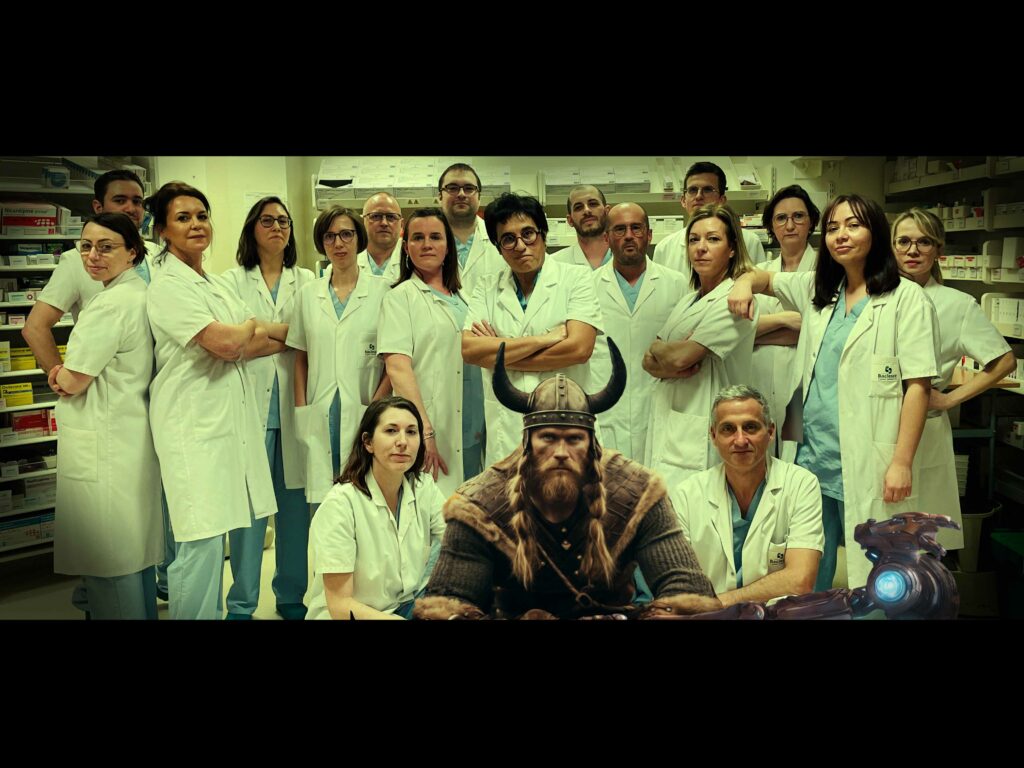
Photomontage of the Centre Baclesse pharmacy team with Thor (video extract)
Find out more:
Here are the different types of cancer treatment manufactured at the Centre's pharmacy:
➜ Chemotherapies: treat the cancer patient with drugs aimed at destroying cancer cells or preventing them from multiplying.
➜ Targeted therapies: target a particular feature of the cancer cell and block this target, involved in the information chain responsible for cell proliferation. As a result, the cancer cell can no longer reproduce.
➜ Immunotherapies: aim to stimulate the body's immune defenses against cancer cells.