

CaPI, or Carcinoma of Unknown Primary Origin, are cancers whose origin cannot be determined despite a standard diagnostic and clinical work-up. In short, there are no elements that usually help in the diagnosis of a cancer to define the starting point of these cancers. CaPI are rare cancers, accounting for around 1-3% of all cancer cases in France. Today, genomic medicine offers new hope.
Unknown primitive carcinoma: an entity in its own right
The location where cancer originates is called the "primary site" or initial tumor. As cancer progresses, cancer cells spread from the primary site to other parts of the body. This spread is called metastasis. CaPI are cancers diagnosed from metastatic sites without being able to identify the primary site, or point of origin.
In some cancer diagnoses, doctors are therefore never able to detect the primary site, and the cancer is classified as CaPI.
Several hypotheses have been put forward:
- The cancer developed by the patient is so aggressive or invasive (spreading through the body) that it is not visible on X-ray examination.
- During the diagnostic workup, only the metastases are visible, as the patient's immune system has wiped out the original tumour.
The standard treatment for CaPI is currently two-drug chemotherapy (Platinum and Gemcitabine).
In the case of a confirmed CaPI, doctors will be able to use genomic analysis after discussing the case at a national consultation meeting. This analysis will enable them to establish a "genetic identity card" for the tumor, which will help doctors classify the tumor and propose a treatment that is even more tailored to the patient.
Genomic medicine: a valuable tool
There is not one cancer per organ, but a multitude of cancer subtypes, each characterized by specific cellular markers, including genetic abnormalities. A better understanding of these abnormalities, in particular in the DNA of tumor cells (tumor genes), and their consequences on the mechanisms of cancer development, has led to the development of new treatments that lead to the specific destruction of tumor cells.
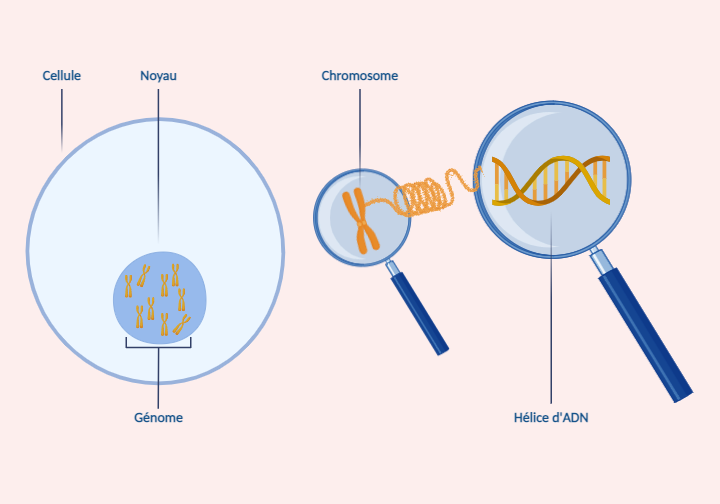
Genome diagram
Precision medicine is based on genomic analysis. The genome comprises all our genetic material. It is located in the nucleus of every cell in our body and is made up of DNA. The aim of genomic analysis is to be able to offer patients a treatment tailored to the genetic characteristics of their tumor (a targeted therapy or tailored treatment), if available.
Genetics vs. genomics: what's the difference?
Genetics: the study of heredity, i.e. the transmission of a trait (or disease) from one generation to the next. It focuses primarily on the study of genes, in particular their association with diseases and their treatment.
Genomics is a much more recent science. The genome contains all the genes of an organism contained in each of its cells in the form of chromosomes.
National platform supports genomic medicine
To help doctors diagnose and treat different types of aggressive or rare cancers (including CaPI), there is a national platform called the "Plan France Médecine Génomique". The France Genomic Medicine Plan 2025(PFMG2025) aims to change the way we diagnose, prevent and treat patients by 2025.
The aim of this plan is to integrate Very High Throughput Genomic Sequencing (VHBGS) into the patient care pathway in order to improve :
- Patient care
- Current knowledge of certain pathologies
As part of the PFMG, two very-high-throughput sequencing (VHTS) laboratories covering the whole of France are currently operational:
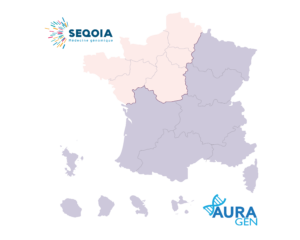
Interpretation of the analyses and sequencing is carried out by various biologists in France, including the biologists in the department of Dr Dominique VAUR, head of the Cancer Biology and Genetics Laboratory at the Centre Baclesse.
The CaPI system has two objectives:
- The first is diagnostic: the analysis enables us to reclassify around 2/3 of the cases studied, i.e. to identify the primary site from a library of cancer data (rather like the genetic fingerprinting system). These cancers may be of the kidney, lung or pancreas, but CaPIs can also originate in other organs.
- The second is theranostic (a contraction of therapy and diagnosis): these are analyses of genetic characteristics, the results of which will influence treatment.
At the Centre Baclesse, just over 30 cases are handled each year (34 cases in 2023), and more than half are analyzed by the SeqOIA platform.
The various genetic anomalies
Genomic analyses can reveal different types of genetic anomalies:
- Tumor-specific abnormalities.
- Abnormalities in the patient's genetic make-up, which may be hereditary.
Depending on the molecular anomalies identified, the doctor may prescribe a targeted drug (or therapy) and/or suggest that the patient take part in a clinical trial evaluating a new drug.
If hereditary genetic variations have been identified, and if the patient has given his or her consent to receive the results, the doctor may refer the patient to the oncogenetics department of the Centre Baclesse for a consultation. Personalized follow-up for the patient and family members will be proposed.
Baclesse's expertise in carcinomas of unknown primary site
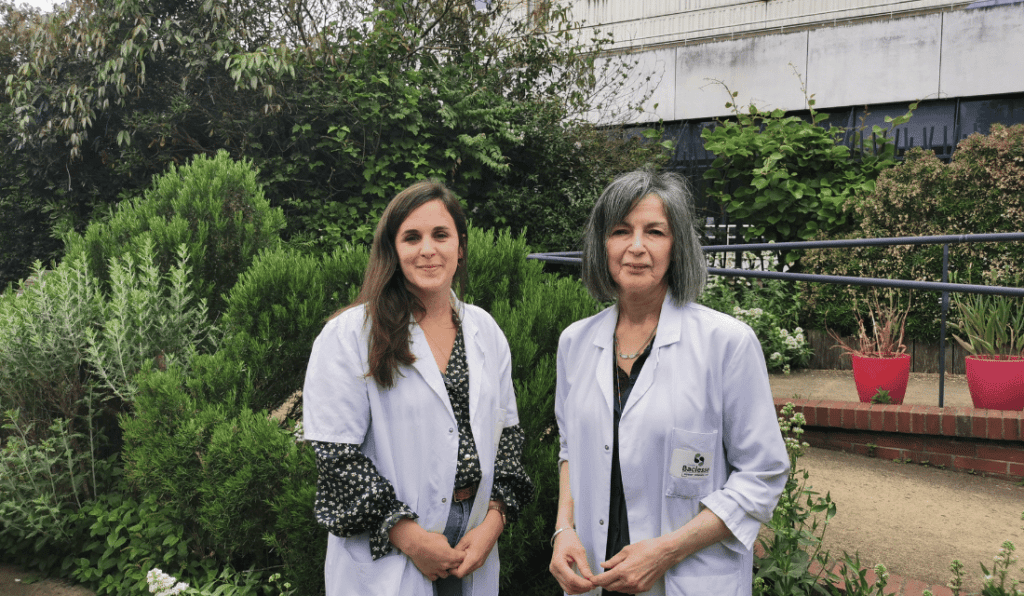
The Centre Baclesse has a CaPI Unit dedicated to the management of this type of cancer. Weekly meetings are organized to discuss the files of patients concerned by this pathology. The cases discussed are referred by oncologists working at the Centre Baclesse or in external hospitals. These patients are often at risk of being misdiagnosed, due to difficulties in establishing a diagnosis.
Access to the France Médecine Génomique plan has been available to patients at the Centre Baclesse since 2022. At the Centre Baclesse, Dr Zoé NEVIERE and Dr Djelila ALLOUACHE manage over 30 cases a year. A national network of expertise is emerging to enable faster treatment and better territorial coverage. Therapeutic trials are also underway, notably using organoids, and could lead to highly personalized medicine for these patients.